How to dose Stevia correctly?
Guide for the optimal dosage of Stevia
It is not always easy to provide a general recommendation for dosing Stevia in drinks and foods. Different Stevia products often vary significantly in taste and sweetness.
Therefore, it is particularly advisable to switch from sugar to Stevia gradually. Large differences in the content of steviol glycosides/rebaudiosides (Stevia) are especially noticeable in whole leaves and the white Stevia extract powder made from them. This is often due to the very different plant varieties and growing conditions.
Although the industrial processing of Stevia products is largely standardized, significant quality differences can occur depending on the manufacturer.
One crucial factor is the quality of the raw materials used by the manufacturers. To mask the taste of inferior Stevia raw materials, dextrose, fructose, glucose, and flavors, particularly vanilla flavors, are often added.
Therefore, be sure to check the ingredient list during your next purchase!
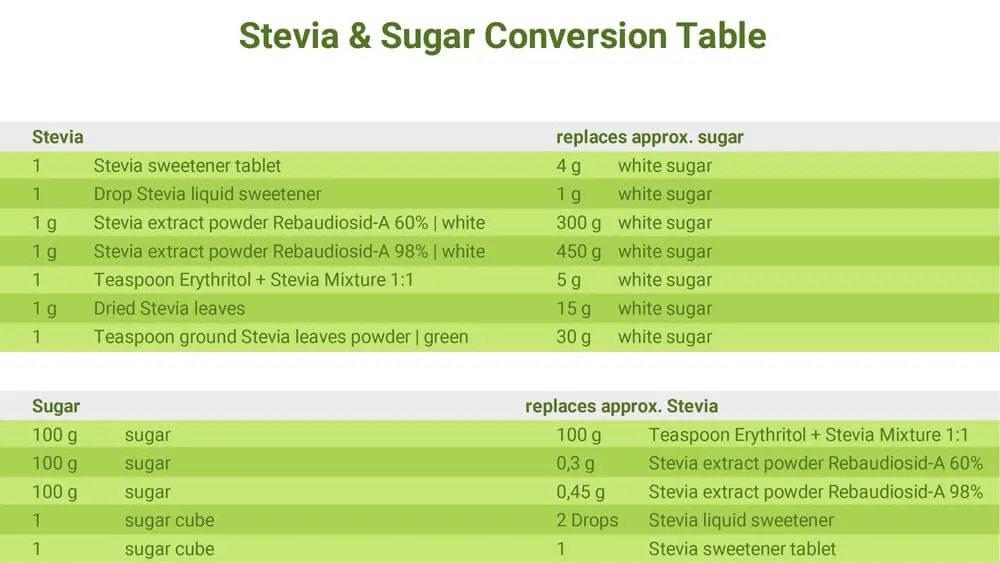
Generally, the manufacturer's recommended dosage guidelines are helpful. Unlike plant parts, Stevia sweetener tablets, liquid sweeteners, or crystalline sweeteners are much easier to dose. Our Stevia conversion table can be a valuable aid for you.
Is the sweetness of Stevia comparable to that of sugar?
The sweetness of Stevia differs significantly from that of sugar. In general, Stevia is about 300 to 450 times sweeter than regular sugar. After a certain dosage, however, the sweet taste does not intensify as our taste buds perceive steviol glycosides differently. Ultimately, everyone should sweeten according to their personal taste preference and over time, create their own conversion table.
How to sweeten foods with Stevia
The quality of the Stevia product used plays a key in proper dosage. While pure Stevia leaves and products have an intense sweet taste, stevioside products are milder and free from bitter substances. High-quality products are characterized by a particularly natural sweetness. The initial challenge of using Stevia products requires some patience, but over time you will develop the necessary precision for proper dosing.
What influences the taste?
Besides steviol glycosides, the nutrient composition, acidity, and temperature of the foods also influence taste.
Is the use of Stevia identical to that of sugar?
Since Stevia has a much lower density than sugar, it must be thoroughly mixed during preparation. When baking, it may be necessary to use more flour or less liquid.
Does the taste change with Stevia?
Foods containing bitter substances should be sweetened sparingly, as green Stevia leaf powder, in particular, can act as a flavor enhancer.
Overdosing Stevia
An overdose of Stevia is not harmful to health but can lead to a particularly bitter taste. This applies regardless of product quality. To avoid overdosing, careful dosing of the sweetener is advisable.
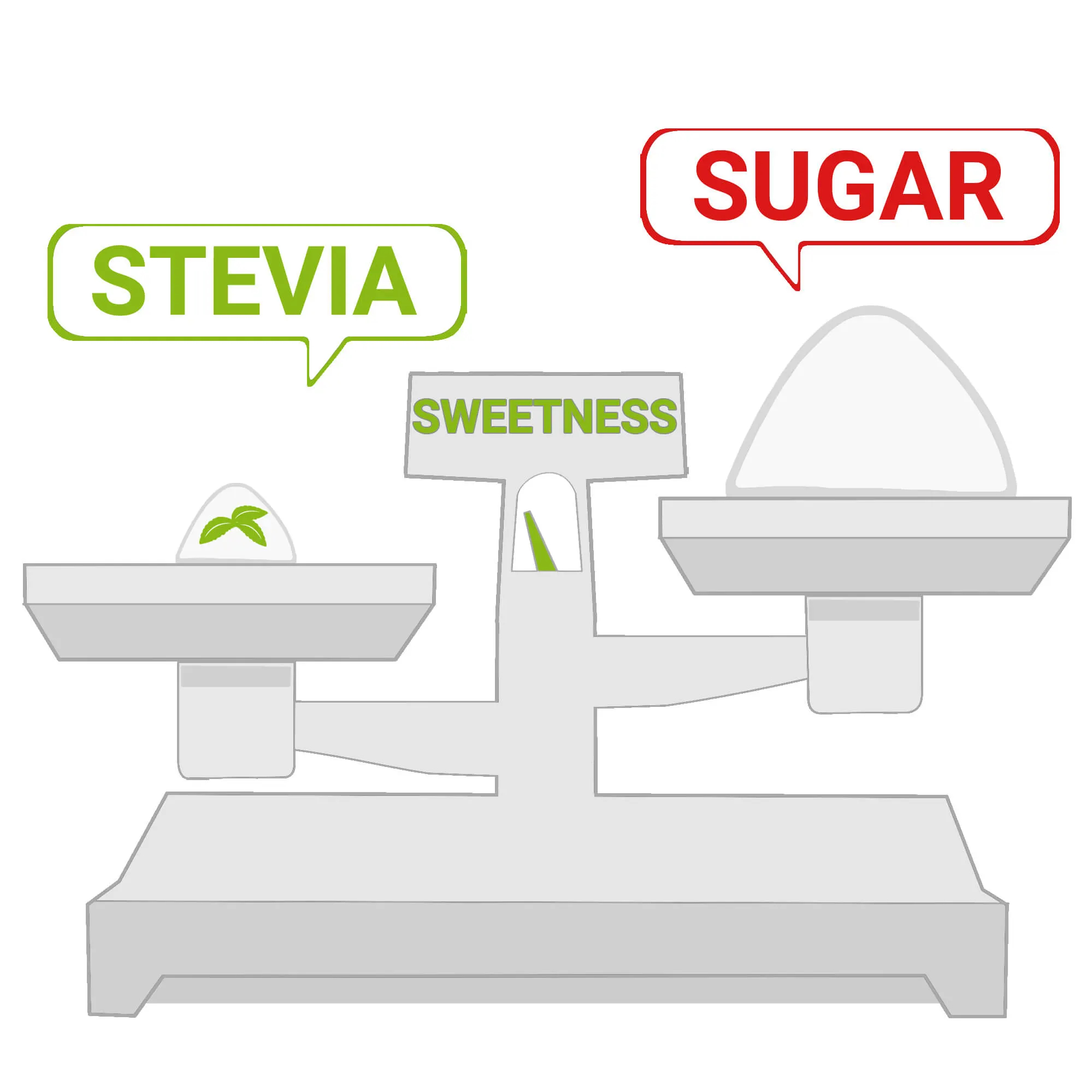
Example of a Quantity Comparison Between Stevia and Sugar
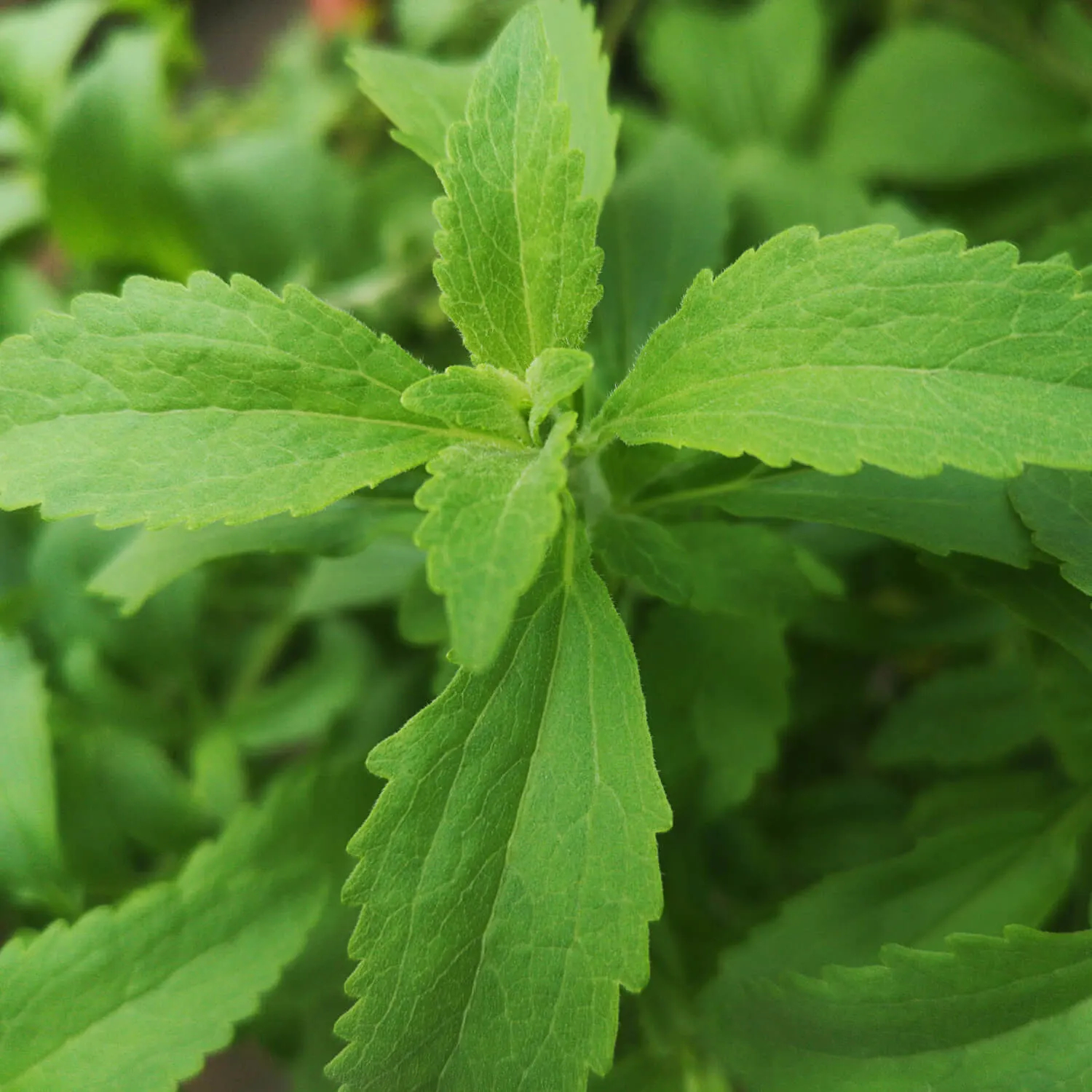
Dose Sweeteners from the Stevia Plant
Properly Dosing Stevia
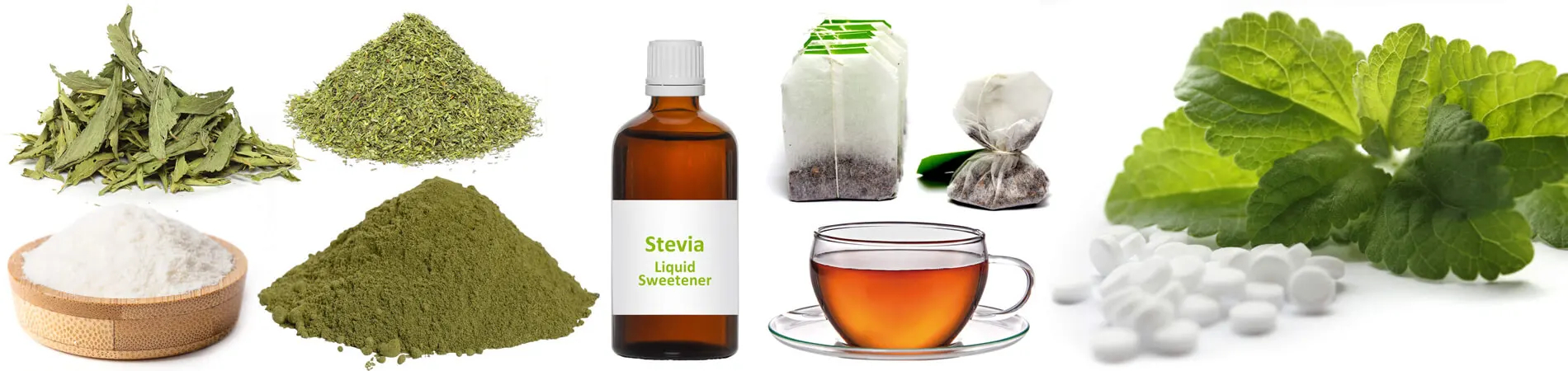
Stevia is available in different forms on the market. These include pure white powder, known as Stevia extract (such as Steviapura, Pure highly concentrated Stevia extract with 60% or 98% Rebaudioside-A), liquid form (e.g., Steviapura, Stevia liquid sweetener), and mixtures of Erythritol and Stevia (such as Steviapura, Stevia crystalline sweetener).
Particularly for baking, Stevia extract in powder form is suitable. It is odorless, water-soluble, and can withstand temperatures of up to 200 °C.
Which Stevia Product for Which Purpose?
The applications and sweetness levels of various Stevia products vary significantly depending on the type of dough. The sweetness in baked goods is influenced by both baking time and type of dough. For most recipes, such as yeast, shortcrust, or batter dough, you can use Stevia extract powder, which is about 300-450 times sweeter than sugar.
We generally recommend dissolving the extract powder in liquids like milk or water that are added to the dough. This allows the sweetness to develop even with shorter baking times. Since shortcrust dough contains little liquid, the Stevia extract should be well mixed with the butter at the beginning.
Stevia Mix Products for Special Applications
For sponge cake dough, we recommend a calorie-free sugar substitute in the form of a Stevia mix product with Erythritol and Stevia. Stevia is also well-suited for fruit creams. The fruits used should be very ripe and sweet. Varieties like quince or rhubarb, which are rather sour, generally need to be sweetened more heavily.
Stevia: Proper Dosing is Key
Precise dosing is essential. We recommend using a digital fine scale when baking with Stevia. If too little Stevia is used, the baked goods or cake may not be sweet enough. Overdosing can cause Stevia to taste bitter.