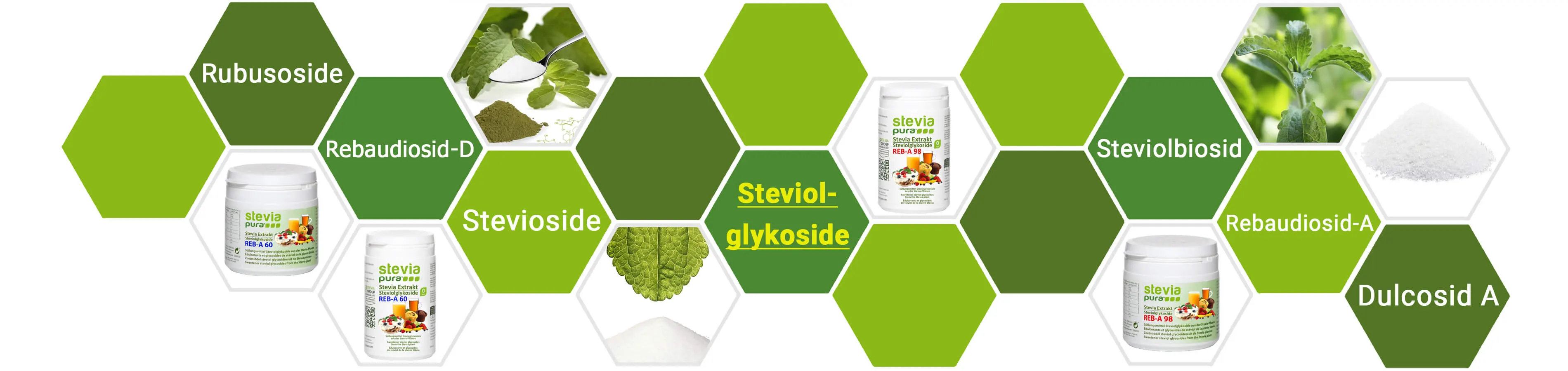
What are Steviol Glycosides?
For several years now, one can find foods sweetened with Stevia in supermarkets. These products contain a natural sweetener, the additive steviol glycosides, which are derived from the leaves of the Stevia plant.
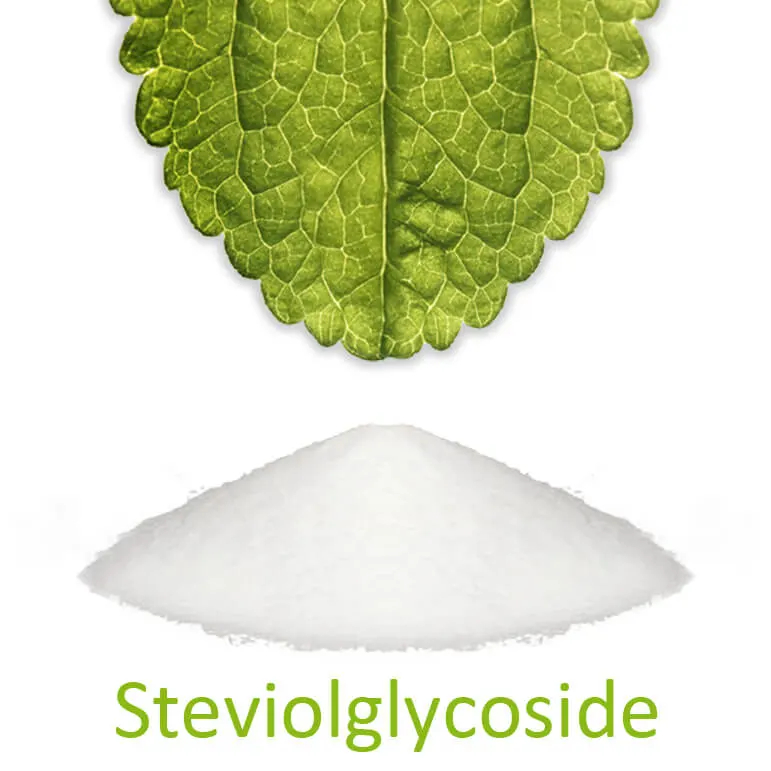
Steviol glycosides are the sweet-tasting components that naturally occur in the leaves of the Stevia plant. Many different steviol glycosides are
contained within Stevia leaves. Each steviol glycoside has its own level of sweetness and a unique flavor profile.
Pure Stevia extracts can contain one or more different steviol glycosides and can be up to 400 times sweeter than sugar.
What is Stevia? What are Steviol Glycosides? Origin: The Sweetener from Honey Leaf
The wild-growing Stevia rebaudiana plant, native to South America, has a long tradition among the indigenous peoples of South America. The population of Paraguay and Brazil also call it honey leaf or sweet leaf. The dried leaves of the Stevia plant are 30 to 45 times sweeter than sugar and have long been used there to prepare maté, tea, foods, and beverages.
Steviol glycosides are extracted from the leaves of the plant. These compounds are up to 400 times sweeter than sugar and are calorie-free and tooth-friendly.
The steviol glycosides used and approved in Europe are often referred to as Stevia, which, strictly speaking, is not the same.
Steviol glycosides are particularly popular for sweetening because they are calorie-free. While many calorie-free sweeteners exist, most are artificially manufactured. Stevia has the advantage of being a plant-based sweetener.
The Difference Between Stevia (Steviol Glycosides) and Artificial Sweeteners
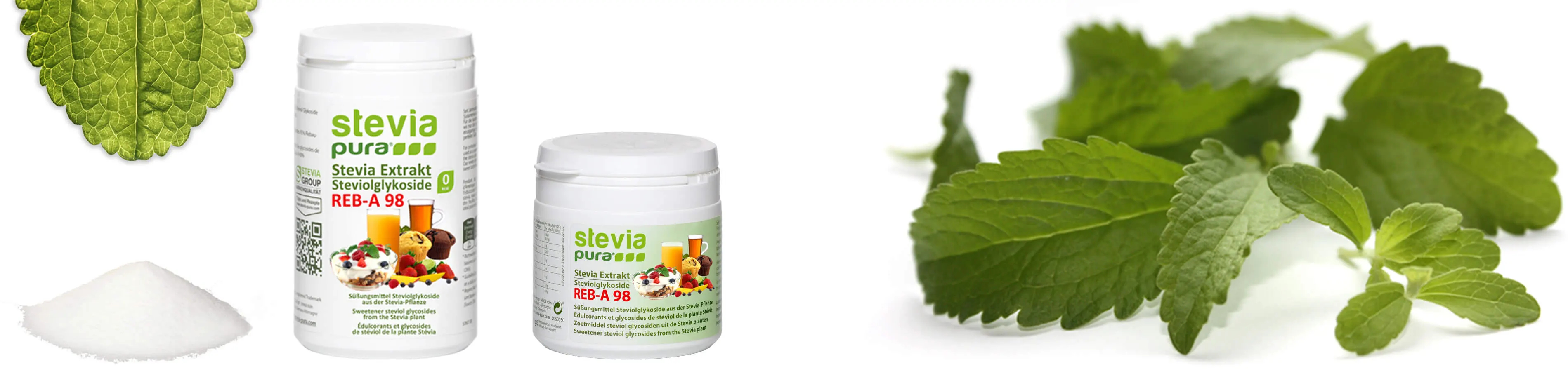
In recent decades, the consumption of calorie-free and low-calorie sweeteners has significantly increased. However, the majority of these sweetening agents are not derived from natural ingredients but are artificially and synthetically produced.
How are Steviol Glycosides Extracted from the Stevia Plant?
Unlike artificial sweeteners such as aspartame, acesulfame, maltodextrin, saccharin, cyclamate, sorbitol, or sucralose, steviol glycosides are derived from the Stevia plant. Nowadays, Stevia plants are grown not only in South America and Asia but also in Europe and other climates.
The sweetest components of the leaves are obtained through the following extraction process: First, the leaves are dried and crushed. Then, extraction with water takes place. During the liquid phase, plant material is separated and filtered. The extract is subsequently purified, either with alcohol approved for food processing or with water. The final step is drying to obtain the natural sugar substitute from the Stevia plant. The extraction and purification process gives steviol glycosides a more sugar-like taste. Untreated Stevia extracts contain additional plant components that are less sweet. To meet the safety standards for foods and beverages, purification is necessary. The result is a pure Stevia extract (steviol glycosides) that must contain at least 95% steviol glycosides to be commercially sold as food grade. It is often referred to as Stevia, steviol glycosides, Stevia leaf extract, Stevia extract, or pure Stevia.
Regulatory authorities, such as the FAO/WHO Joint Expert Committee on Food Additives (JECFA), Codex Alimentarius (Codex), and the European Food Safety Authority (EFSA), have only approved highly pure Stevia extracts for use in beverages and foods.
As a sweetening agent, Stevia is included in thousands of beverages and food products worldwide. It is used for calorie-free sweetening in baked goods, yoghurt, cereals, dairy products, tea, soft drinks, juices, salad dressings, chocolate, sauces, confectionery, water, and as a table sweetener.
The Approval of Steviol Glycosides in the EU
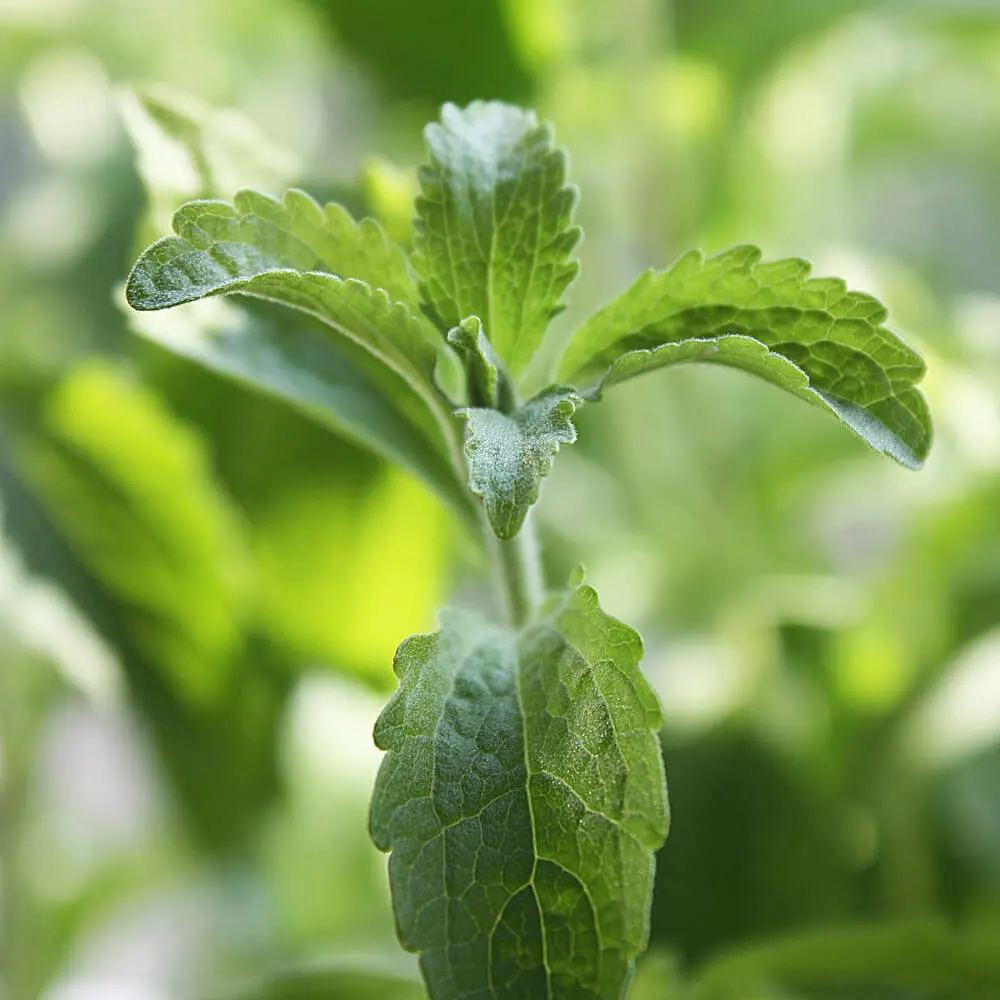
After the safety of Stevia extracts was evaluated by the European Food Safety Authority (EFSA), steviol glycosides were approved as a sweetener (E960) in the EU in 2011. In the USA, Stevia sweeteners have been approved since 2008.
The EFSA has established the acceptable daily intake (ADI) for steviol glycosides in foods as steviol equivalents at four milligrams per kilogram of body weight. The ADI value describes the amount of a substance that a person can consume daily over their entire lifetime without expected health risks.
In the ingredients list, steviol glycosides must be labelled as "sweetener E960" or "sweetener steviol glycosides." Since steviol glycosides are not listed in the EU Organic Regulation, they cannot be used in organic foods.