Obesity
Medical professionals describe obesity as significant overweight. There are various causes, and the related secondary conditions are numerous and diverse. Even children can experience illnesses caused by obesity. Approximately 25% of the population has a BMI that exceeds 30, classifying them as obese.
Defining obesity:
Originating from Latin, the term "obesity" is frequently translated as "fatness" or "corpulence." Another word for it is "obesities." This term is used to define morbid, significant overweight. Although roughly, obesity is assessed using the body mass index (BMI). As excess weight becomes more severe, the risk of health issues linked to obesity increases.
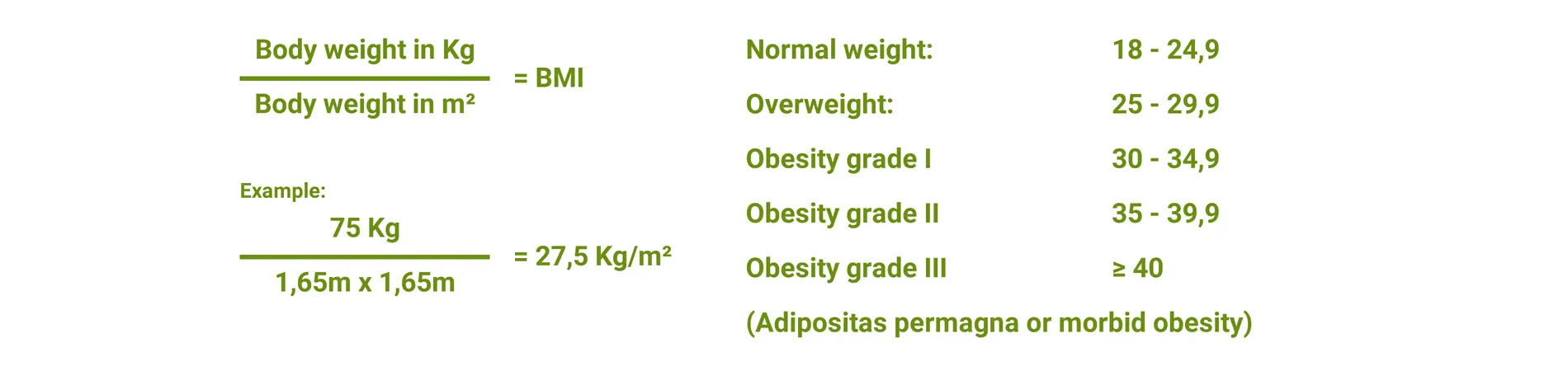
In Germany, the rate of obesity is notably high. Nearly a quarter of the population is significantly overweight. Obesity is often synonymous with excessive weight. Some individuals and doctors view obesity not as an illness but as a sign of an unhealthy lifestyle. However, it is a condition with many contributing factors. According to the World Health Organization (WHO), a person is classified as obese if their body mass index (BMI) surpasses 30 kg/m². Nonetheless, the BMI serves only as a general guideline.
To calculate the BMI, one divides the body weight in kilograms by the square of the body height in meters. This index aids in determining the level of obesity. For instance, the German Obesity Society provides an online BMI calculator.

Here is how the body mass index and the corresponding degree of obesity are determined:
Fat distribution plays a crucial
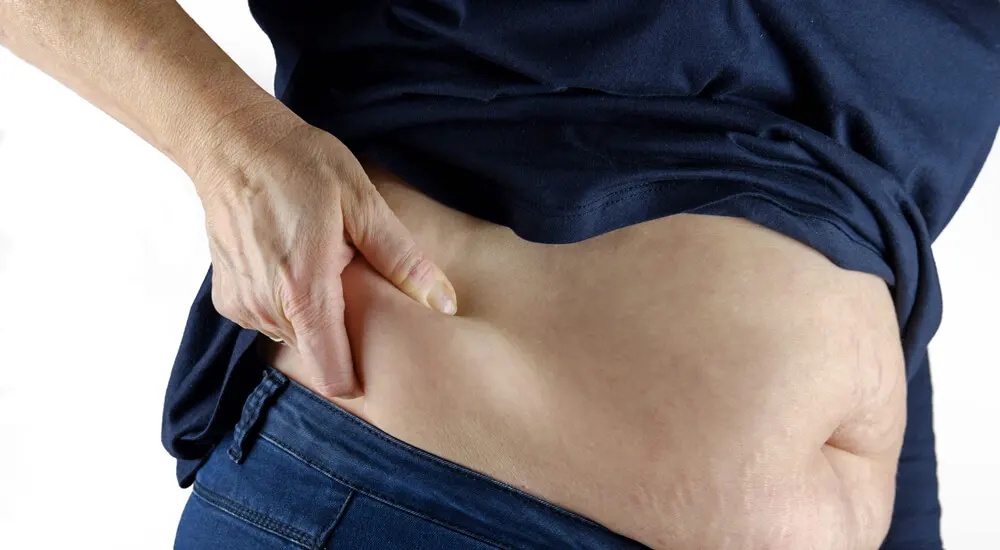
Obesity is linked to various secondary diseases, including diabetes and cardiovascular conditions. The distribution of body fat is the primary factor determining the risk of these secondary diseases. The "pear type," characterized by fat deposits on the hips and thighs, is less at risk compared to the "apple type," which has a greater concentration of abdominal fat.
To assess this risk, doctors measure the circumference of the abdomen and waist between the upper edge of the hip bone and the lower ribcage. Men with waist circumferences exceeding 94 cm and women over 80 cm are at higher risk for strokes, coronary heart disease, and type 2 diabetes. The risk is extremely high for men with more than 102 cm and women with more than 88 cm. Additional tests, such as metabolic examinations, can offer greater insight.
A commonly used method by experts is the waist-to-hip ratio calculation. This involves dividing the abdominal circumference by the hip circumference. Ideally, this ratio should be below 0.85 for women and below 1.0 for men. The disease risk is also often assessed by the waist-to-height ratio, where age is a significant factor. For individuals under 40, a value below 0.5 poses no concern.
The acceptable range for those aged 40 to 50 is between 0.5 and 0.6, and it should remain below 0.6 for individuals over 50. However, simply calculating this ratio is not enough for a comprehensive assessment. Further examinations are necessary for an accurate diagnosis.
An elevated BMI or being overweight alone doesn't necessarily pose a problem. Individuals whose fat is primarily located on the thighs or buttocks and who possess a lot of muscle mass are at lower risk. Nonetheless, the greater the waist circumference or BMI, the higher the likelihood of developing high blood pressure, lipid metabolism disorders, arteriosclerosis, or diabetes. True severe, pathological overweight is considered when both the BMI and the waist-to-hip ratio exceed the specified limits. Medical intervention is strongly advised if any of the mentioned secondary diseases are present.


The origins of obesity
There are numerous origins for obesity, including biological, genetic, psychological, social, and neurobiological factors, as well as environmental conditions.
Researchers increasingly link the widespread prevalence of obesity in industrialized nations to weight-promoting environmental factors, known as the obesogenic environment. This includes poor diet, overeating, and insufficient physical activity. The belief that obesity is solely a personal responsibility should be reconsidered, as multiple factors encourage obesity.
The body receives excess energy
On a superficial level, morbid obesity can be easily explained; the body receives more energy from food than it expends due to lack of physical activity, resulting in excess energy being stored as fat in fat cells.
While researchers generally concur on this point, it remains unclear why some individuals consume more than necessary while others manage to restrict their intake to meet the body's needs. Neurobiology, for instance, provides several explanations for this phenomenon. Consequently, obesity treatment must be customized to suit the individual needs of each patient.

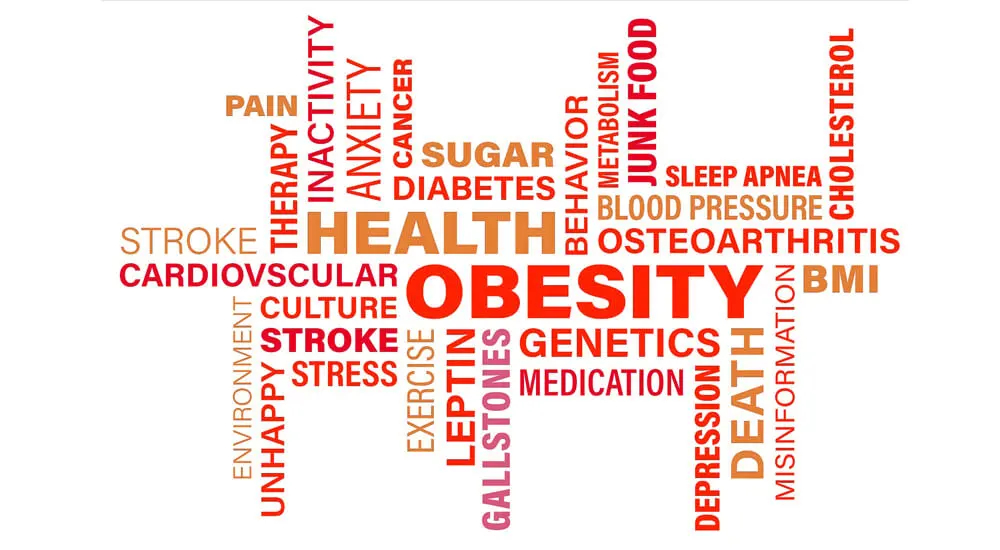
Obesity can have various causes, ranging from genetic defects to sleep hygiene.
Certain individuals may have a genetic defect that eliminates the sense of fullness. Others have been using eating as a stress management tool since childhood. For these individuals, eating is the only way their reward center achieves balance.
Some people experience sleep disorders that simultaneously disrupt their metabolism. These individuals consistently feel hungry, even when their body doesn't require food. People with severe obesity may react to stress by increasing their insulin levels, preventing adequate fat breakdown even when physically active.
There are obese individuals who experience uncontrollable binge eating episodes. During these episodes, they lose control, and regaining it is almost impossible without external help.
It's also believed that some people maintain a healthy weight with a BMI of 30. Although they are considered overweight, they don't face any health restrictions. For them, obesity might be more of a social issue.
Trends in the development of obesity
Over 50% of German adults are overweight, with 25% classified as obese. Among children and teenagers, around 15% are overweight and 6% are already experiencing morbid obesity. The number of obese and severely obese individuals is particularly on the rise.
Trends in adult obesity
According to the DEGS study (2008-2011) conducted by the Robert Koch Institute, 61.7% of men and 53% of women with a BMI over 25 are categorized as overweight. Obesity (BMI >30) affects 23.3% of men and 23.9% of women in Germany aged 18 to 91. A decade earlier, the figures were 19% for men and 22.5% for women. Both sexes show the most significant increase in obesity in the 25 to 34 age group, suggesting a correlation with the introduction of various new media during their upbringing.
(Source: https://www.rki.de/EN/Content/Health_Monitoring/HealthSurveys/Degs/degs_node.html)


Trends in obesity among the youth, focusing on both children and teenagers.
The KIGGS study, conducted by the Robert Koch Institute between 2003 and 2009, reveals that 15% of German children and teenagers aged 3 to 17 have an overweight status. Overweight is determined using BMI and percentile curves. In Germany, there are a total of 1.9 million young individuals in this category, marking a 50% increase compared to 1985-1999.
Approximately 6% of young individuals fall into the obese category. This statistically translates to 800,000 out of the 1.9 million youth being significantly overweight. Their numbers have doubled since the period from 1985 to 1999.
As children grow older, the rate of overweight cases rises: 9% of those aged 3-6 are already above the normal weight, by ages 7 to 10 the rate climbs to 15%, and it reaches 17% among those aged 14 to 17.
(Source: KIGGS Children and Youth Health Study | https://www.rki.de/EN/Content/Health_Monitoring/HealthSurveys/Kiggs/Kiggs_node.html)
A lower social status elevates the risk of obesity.
For young people from families with lower socioeconomic standing, the probability of being overweight increases. Particularly at risk are children from migrant backgrounds, specifically from Turkey, Poland, and Central to Southern European countries.
(Source: KIGGS Child and Adolescent Health Survey; www.kiggs-studie.de)
Nearly one-third of the global population struggles with excess weight.
In the USA, the rates of obesity are higher than in Germany; with 2/3 of the American population being overweight, 36% of adults facing obesity issues, paralleled by 17% of children. The French and Swiss have slightly better statistics, whereas about 25% of the British population is obese.
Obesity has evolved from being a Western-centric issue to a worldwide concern. Back in 2008, researchers noted 1.5 billion overweight or obese individuals globally, doubling since 1980. Projections from Tulane University scientists in the USA suggest there could be 3.3 billion overweight individuals worldwide by 2030.
Nations with high obesity rates include Mexico, Gulf States, and Pacific Islands, while South Africa, Brazil, and China are catching up. In several developing nations, the number of overweight women now surpasses those underweight. The correlation between economic growth and increasing body weight is particularly striking. Children of underweight mothers are especially susceptible to severe obesity, affecting the younger generations in emerging countries.

The aftermath of obesity | The effects and consequences of obesity
At present, effective treatments are lacking, making the resolution of obesity still distant. This is particularly concerning due to the illnesses associated with obesity. According to the World Health Organization (WHO), obesity contributes to roughly 44% of diabetes cases and 40% of some cancers. Therefore, the impact of obesity on health and economic resources for both patients and the general population is substantial. Analysis from The Economist suggests that obesity incurs about 40% more costs than maintaining a normal weight.
The German Obesity Society provided specific cost estimates in 2003: more than 85 million Euros for obesity treatments, 11.3 billion Euros for diseases resulting from obesity, and up to 1.6 billion Euros in indirect costs like lost working hours.
In emerging nations, there is often insufficient capacity to diagnose and treat secondary conditions such as cardiovascular diseases, diabetes, high blood pressure, and fatty liver. These countries face a dichotomy: rising prosperity is altering diet and lifestyle, leading to obesity and its consequences, while healthcare systems remain largely inadequate.
You can find information about obesity here:
We have gathered the most significant information regarding obesity for you.
Offering up-to-date information and scientific discussions spanning a wide range of obesity-related topics.
The links below provide specific, independent, understandable, and quality-assured information for different target audiences.