
The Sweetener Stevia
We share essential information about the plant-based sweetener here with you.
Sweetening freely without calories and in a natural way? What initially sounds like a fantasy has become a reality nowadays. Thanks to the approval of Stevia by the European Union, lovers of sweet foods have now found their fulfillment.
Extremely sweet, low in calories, and derived from nature: For all those who want to indulge in a healthy way, Stevia seems to be the perfect alternative. The sweetener can already be found in many food products.
It is well-known that sugar is detrimental to health. It contributes to weight gain, damages teeth, and contains only empty calories. High sugar consumption can lead to diabetes. Nevertheless, many people do not want to completely forgo sweets. Fortunately, there are healthier alternatives, and Stevia is one of them.
Is Stevia a suitable sugar substitute?
Stevia is the sugar alternative derived from a plant. This plant-based sugar option offers numerous advantages over traditional sugar. It is tooth-friendly and does not cause cavities.
Even diabetics can enjoy foods sweetened with Stevia without any negative impact on blood sugar levels. Since Stevia contains almost no calories, it does not contribute to weight gain. Therefore, it can be used to support weight loss within the context of a diet.
How to use Stevia?
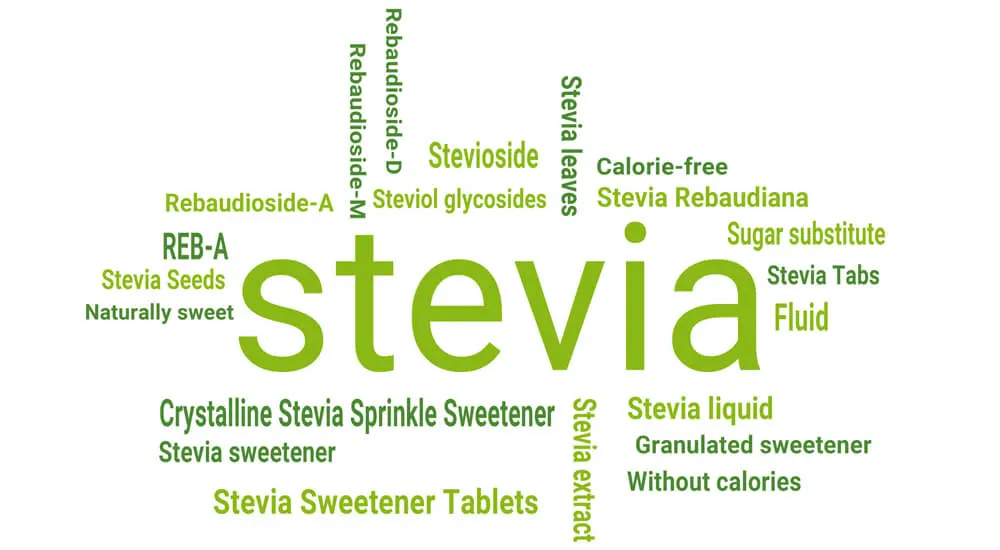
Similar to other sweeteners, Stevia is used as a sugar substitute. The extract of the Stevia plant, mostly in powder form, is found in numerous food products today. Apart from cola, many manufacturers use Stevia in items like candies, gummy bears, iced tea, yogurts, ketchup, pickles, jam, and chocolate.
The sweetness of the Stevia plant is also available in the form of tablets, liquid sweeteners, or as powder.
How sweet is Stevia compared to sugar?
When dosing Stevia, caution is advised, as this sweetener is up to four hundred times sweeter than regular table sugar. A 1:1 replacement of sugar with Stevia is therefore not possible, as the result would be unpalatable. Those wishing to use Stevia for cooking or baking should definitely use appropriate recipes.
Sugar cannot be replaced 1:1 with pure Stevia, as the Stevia extract behaves differently from sugar both chemically and physically. For example, sugar browns when baking, while Stevia does not. Thus, recipes must be adjusted accordingly.
When making jelly, preserves, and jams, it's important to note that sugar has a natural preservative effect, which is absent in Stevia. Here, the use of gelling sugar or, preferably, apple pectin can be helpful.
For satisfactory results with Stevia, proper handling is crucial. Special recipes and potential additives can be helpful in this regard. Good Stevia recipes can be found online in Stevia cookbooks, which enable cooking and baking with Stevia as a sugar substitute.
How does Stevia differ from other sweeteners?
Stevia is a natural product, in contrast to synthetic sweeteners like aspartame, cyclamate, saccharin, and sucralose. However, there are other natural sugar alternatives such as erythritol and xylitol. Compared to sugar, erythritol and xylitol have a significantly lower sweetness (only about 60-70%). Therefore, erythritol is often mixed with pure Stevia extract to enable a 1:1 dosage like sugar, which greatly simplifies recipe conversion.
Important information about Stevia
Since December 2, 2011, Stevia-based sweeteners have been officially approved in the EU. Unlike traditional artificial sweeteners, Stevia has hardly any calories and is not synthetically produced in labs but extracted from the Stevia plant itself.
The sweeteners derived from Stevia are of natural origin. The leaves of the Stevia plant contain steviol glycosides, which are about 30 times sweeter than regular sugar. However, newer forms of Stevia sweeteners in tablet or powder form do not have the same sweetness, as EU regulations require a purity level of at least 95%.
To use Stevia similarly to sugar, a suitable solution to achieve a comparable consistency has been sought for a long time. Nowadays, steviol glycosides are often combined with carrier substances, mostly polyols. Polyols are sugar substitutes that naturally occur in foods like mushrooms, melons, and seaweeds.
Polyols are a group of organic compounds, also known as polyalcohols or sugar alcohols, which contain multiple hydroxyl groups (-OH). Despite having similar chemical structures, polyols are neither sugar nor alcohol and are commonly referred to as sugar alcohols.
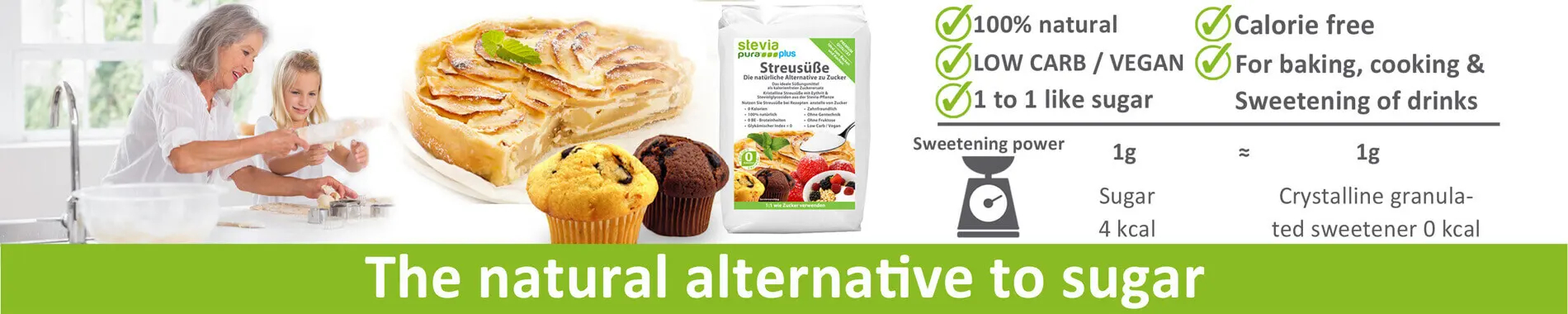
The result is a sweetener that can be used 1:1 like sugar but with up to four times the sweetness of regular household sugar.
Origin of Stevia
This extremely sweet plant originates from Paraguay, where it has been used by the indigenous people as a sweetener for centuries. Scientific studies of the plant began in the late 19th century. In the 1960s, Stevia was first cultivated in Japan. Today, most Stevia raw materials are produced in China. Stevia is now grown worldwide and is available year-round.
Taste of Stevia
The leaves of the Stevia plant naturally have a licorice-like taste, which is largely neutralized in the resulting sweetener. However, some people with a particularly sensitive palate may still detect a slight aftertaste when using Stevia. This is often due to the quality of the Stevia extract or an overdose, which can lead to an unpleasant bitter aftertaste.
Important Notes on Stevia Ingredient Lists
For those with allergies, it is particularly important to carefully check the ingredient list, as many Stevia products are mixed with filler or carrier substances to improve dosability. Such additives can include fructose, glucose, lactose, or maltose and maltodextrin, which can cause intolerances in sensitive individuals.
Shopping Tips for Stevia
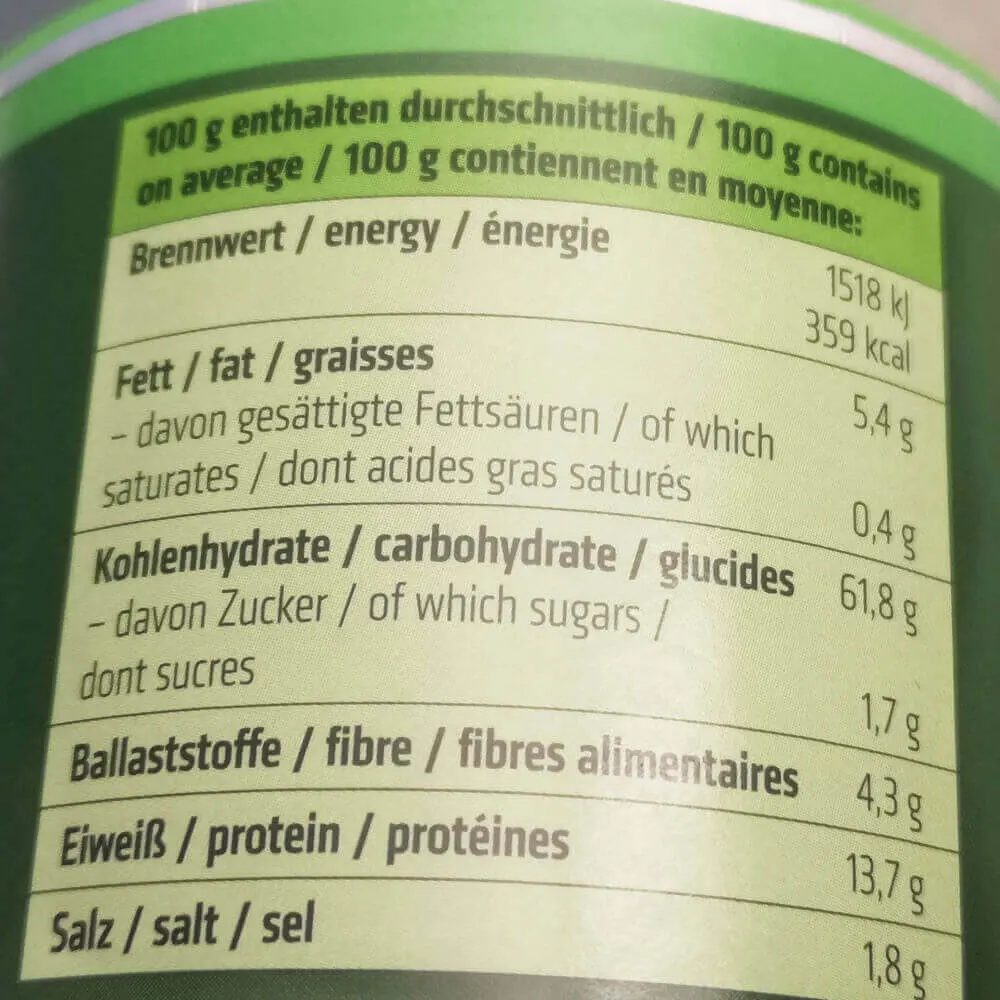
Pay close attention to the ingredients when selecting Stevia products: Carrier substances like maltose are often used, which have as many calories as regular sugar.
Carefully check the ingredient list when purchasing Stevia. Manufacturers often stretch Stevia products with sugar-containing substances such as dextrose, fructose, glucose, lactose, maltodextrin, or synthetic sweeteners, which can have as many calories as table sugar.
Regardless of whether Stevia is in tablet, liquid, or powder form, the quality of a sweetener is significantly determined by its purity and composition. EU regulations require that Stevia sweeteners contain at least 95% steviol glycosides, of which at least 75% should be from steviol glycosides and/or rebaudioside A.
Rebaudioside A is considered the best compound concerning sweetness and taste. Therefore, Stevia products with a high content of rebaudioside A are of higher quality.
Storing Stevia
Stevia sweeteners are particularly sensitive to moisture. Therefore, Stevia powder or Stevia tablets should always be stored in tightly closed containers and kept as dry as possible.
Cooking Tips for Stevia
Stevia is stable up to a temperature of about 200 degrees Celsius and can thus be used for baking and frying cookies, cakes, and pancakes. However, the dough does not brown as the sugar crystals that caramelize upon heating are missing.
The maximum temperature stability of Stevia is about 200 degrees Celsius, which makes it suitable for cooking and baking. Since Stevia-sweetened dough lacks sugar crystals that caramelize when heated, the dough hardly browns. It is advisable to use Streusüße, a mixture of erythritol and Stevia.
The volume of Stevia sweetener is less than that of sugar, which can lead to unsatisfactory baking results. Here too, the use of Streusüße (a mixture of erythritol and Stevia) is recommended.
For example, cookies and sponge cakes usually contain a lot of sugar. Stevia, on the other hand, is very suitable for shortcrust and yeast dough. When cooking jelly and marmalade with Stevia, there is another limitation: The shelf life is significantly shorter than with sugar preparations.
Follow the dosage recommendations and instructions of the manufacturers on the respective packages. Stevia is an almost perfect sugar alternative. It is ideal for sweetening tea and coffee and can be used in liquid form, as powder, or Streusüße in yogurt, rice pudding, quark dishes, fruit salad, smoothies, and pudding.


The Proper Dosage of Stevia
Because Stevia extract has a very high sweetness, you should use it cautiously. It is advisable to use Streusüße, a mixture of erythritol and Stevia, as this mixture can be dosed like sugar in a 1:1 ratio.
Why does Stevia sometimes taste bitter?
At high concentrations, the natural sweetener can have a bitter, licorice-like aftertaste. The structure of the steviol glycosides affects how sweet or bitter the final product is. A higher amount of bound glucose reduces bitterness and increases sweetness. Therefore, make sure to buy high-quality Stevia.
Where is Stevia available?
Stevia powder can be found in many stores, including supermarkets and drugstores. Health food stores also offer Stevia in the form of powder, liquid extract, or tablets. Additionally, Stevia extract can be purchased online, where you can find not only the powder but also Stevia plants and dried leaves.
Rethinking Sugar Consumption
For a health-conscious diet, you should reconsider your consumption of sugar and artificial sweeteners. The constant reach for sweet foods, especially beverages like soda, leads to habituation, regardless of whether they contain sugar or substitutes. Therefore, it is recommended to choose unsweetened drinks, especially for children and teenagers. Water should be the preferred drink, as children who consume a lot of sugar-sweetened beverages are at a higher risk of becoming overweight later in life.
Even with a balanced diet, you do not have to completely give up sweets. It is, however, advisable to reduce the consumption of sugary sweets and always monitor the sugar content.