The Stevia plant | Stevia rebaudiana
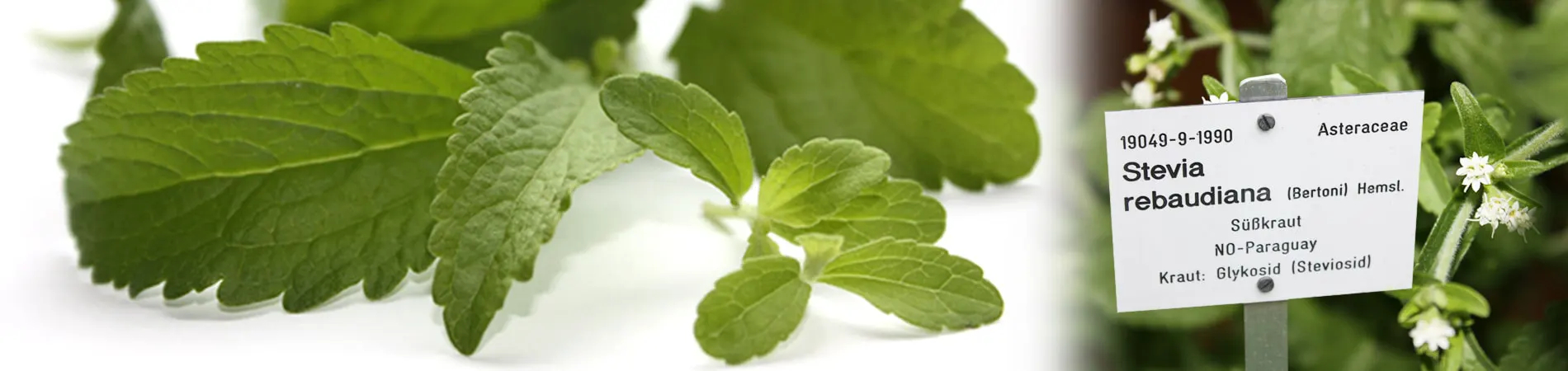
Stevia rebaudiana Bertoni is a compact, shrub-like plant belonging to the family Asteraceae or Compositae. The Stevia plant originates from Paraguay and preferably grows in sandy soils near watercourses. In the wild, this plant can reach a height of approximately 75 cm.
The scientific name Stevia rebaudiana Bertoni is composed of the genus name Stevia, the species name rebaudiana, and the designation Bertoni.
There are more than 150 species within the genus Stevia, but only the Stevia rebaudiana species contain the sweet steviol glycosides. Due to these properties, this Stevia species is also referred to as honey leaf, honey herb, or sweet herb by indigenous groups in Paraguay and Brazil, such as the Guarani and the Mato Grosso natives. In the Guarani language of Paraguay, the sweet herb is known as caá jeé, kaá heé, or Yerba Dulce.
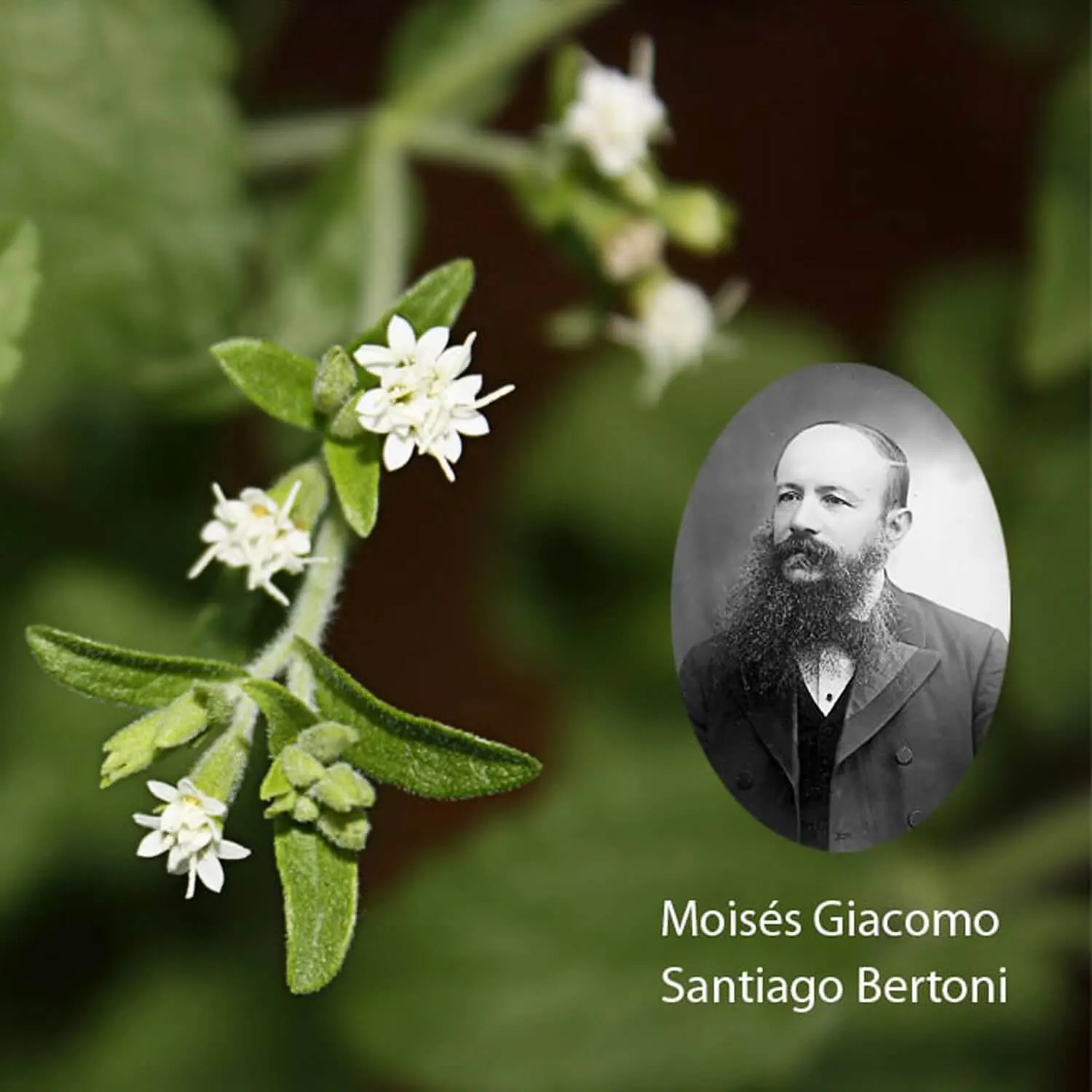
The botanist Moisés Bertoni was the first to discover the sweet components of the Stevia plant. The chemist Ovidio Rebaudi analyzed and identified the individual components of the Stevia leaves, including steviosides and rebaudiosides A to F.
Origin and Spread of the Stevia Plant
The highlands of Argentina, Brazil, and Paraguay, between the latitudes 22°-23° South and the longitudes 55°-56° West, are the natural habitat of the Stevia plant.
In the border regions between Argentina, Brazil, and Paraguay, where the soil and moderately humid climate prevail, the genus Stevia rebaudiana thrives optimally with an average annual temperature of 21°C and an annual rainfall of 1500 to 1800 mm.
On the sandy, acidic, and clay-rich highlands of Amambai in the state of Mato Grosso do Sul at the border between Brazil and Paraguay, the sweet Stevia species grow particularly well.
Nowadays, the Stevia plant is cultivated in Latin America, Southeast Asia, and on almost all continents of the world to obtain its sweet components, the steviol glycosides and rebaudiosides. The extraction of these sweeteners is carried out through a complex extraction process.
The Constituents of Dried Stevia rebaudiana Leaves
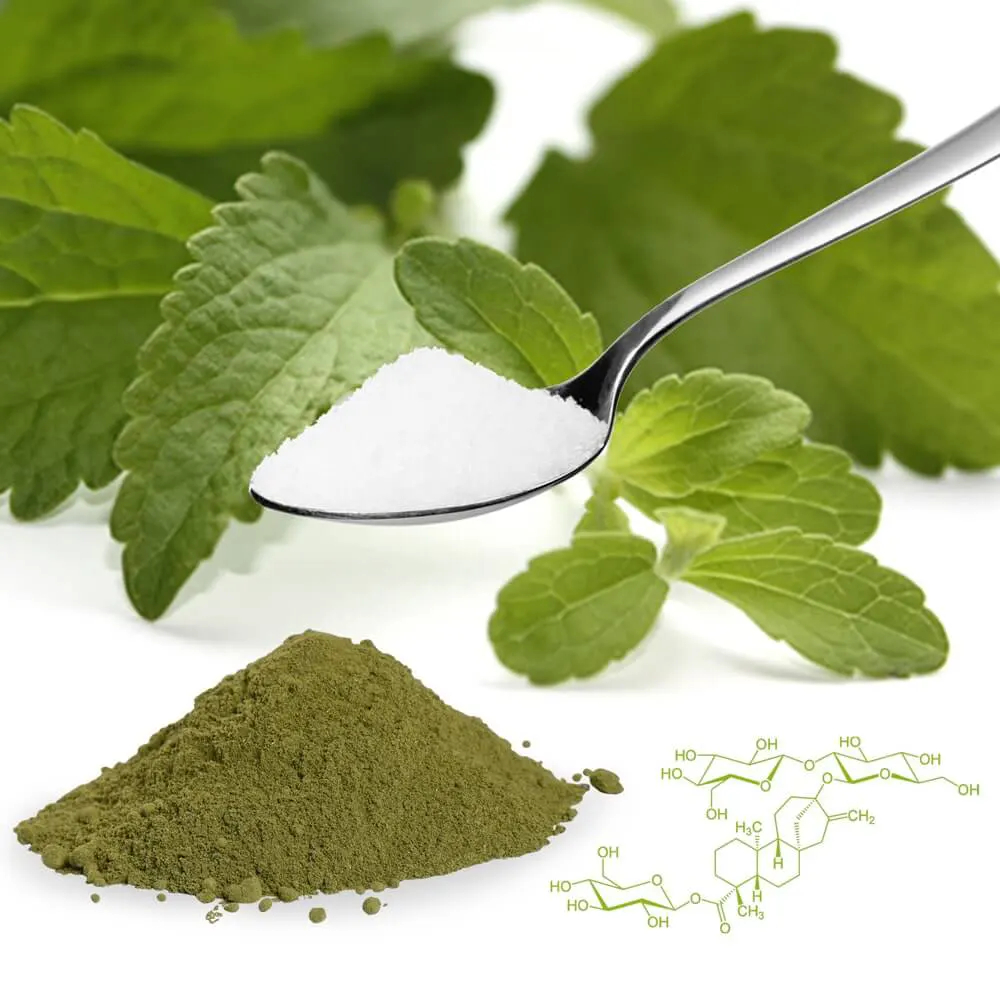
In the leaves of the Stevia rebaudiana plant, sweet-tasting compounds known as steviol glycosides or steviosides are formed. These compounds are responsible for the sweetness of the Stevia plant. Of greatest importance are the steviol glycosides and rebaudioside A.
Additionally, Stevia leaves contain other sweetening substances such as dulcoside A and rebaudiosides B, C, D, E, F, and steviolbioside. Based on the dry weight of Stevia leaves, a leaf contains between 5-10% stevioside, 2-4% rebaudioside A, 1-2% rebaudioside C, and 0.4-0.7% dulcoside A.
Dried Stevia leaves are about 20 to 30 times sweeter than sugar, and the extract obtained from them, the steviol glycosides, can be up to 300 times sweeter.
Additional Constituents of Stevia Leaves
The leaves of the Stevia rebaudiana plant are also a good source of proteins and carbohydrates. The high content of inorganic minerals is attributed to the high ash content. Also of significance are the minerals and secondary plant compounds found in the Stevia leaves.
The Botany of Stevia
Stevia rebaudiana is a shrub-like plant from the Asteraceae or Compositae family. This plant is originally from Paraguay and prefers sandy soils.
In a frost-free climate, the Stevia plant develops a strong root system, from which perennial shoots up to one meter high grow. Stevia is classified as a shallow-rooted plant, meaning its roots spread out in a plate-like manner in the upper soil layers.
The Leaf of Stevia
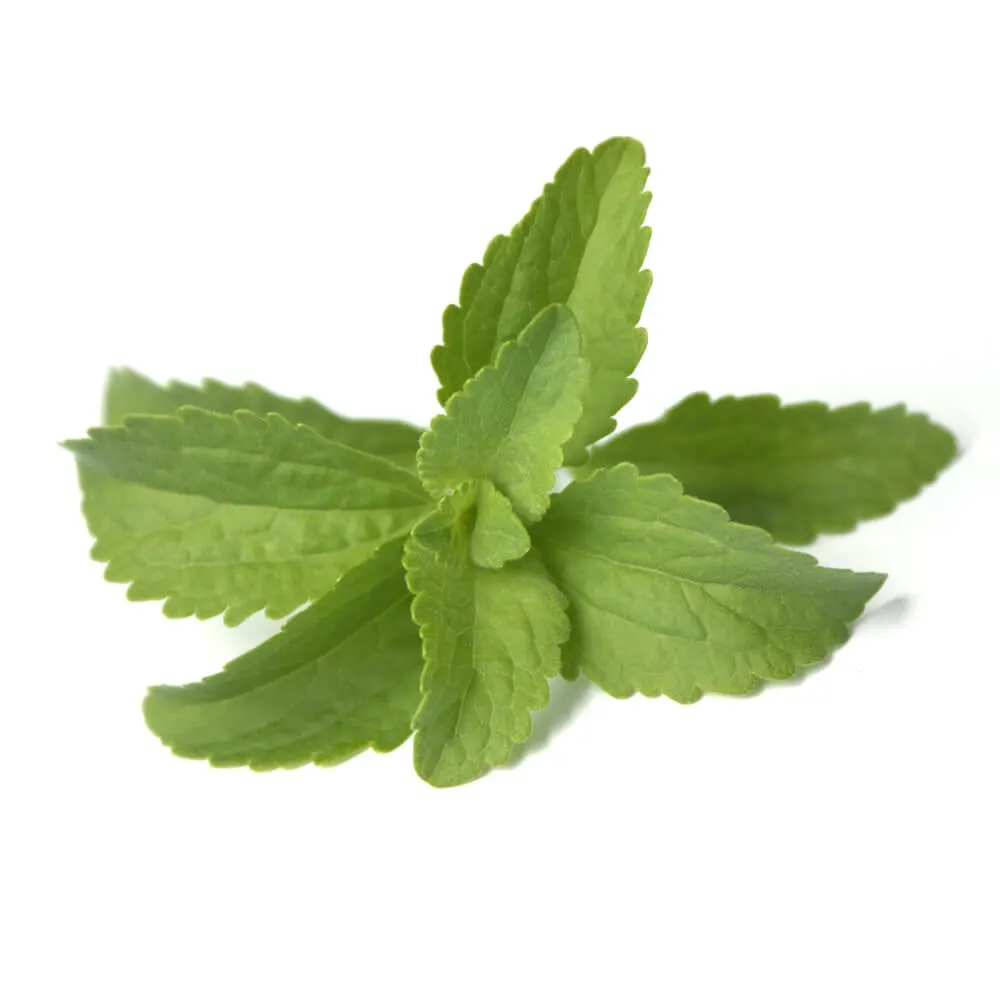
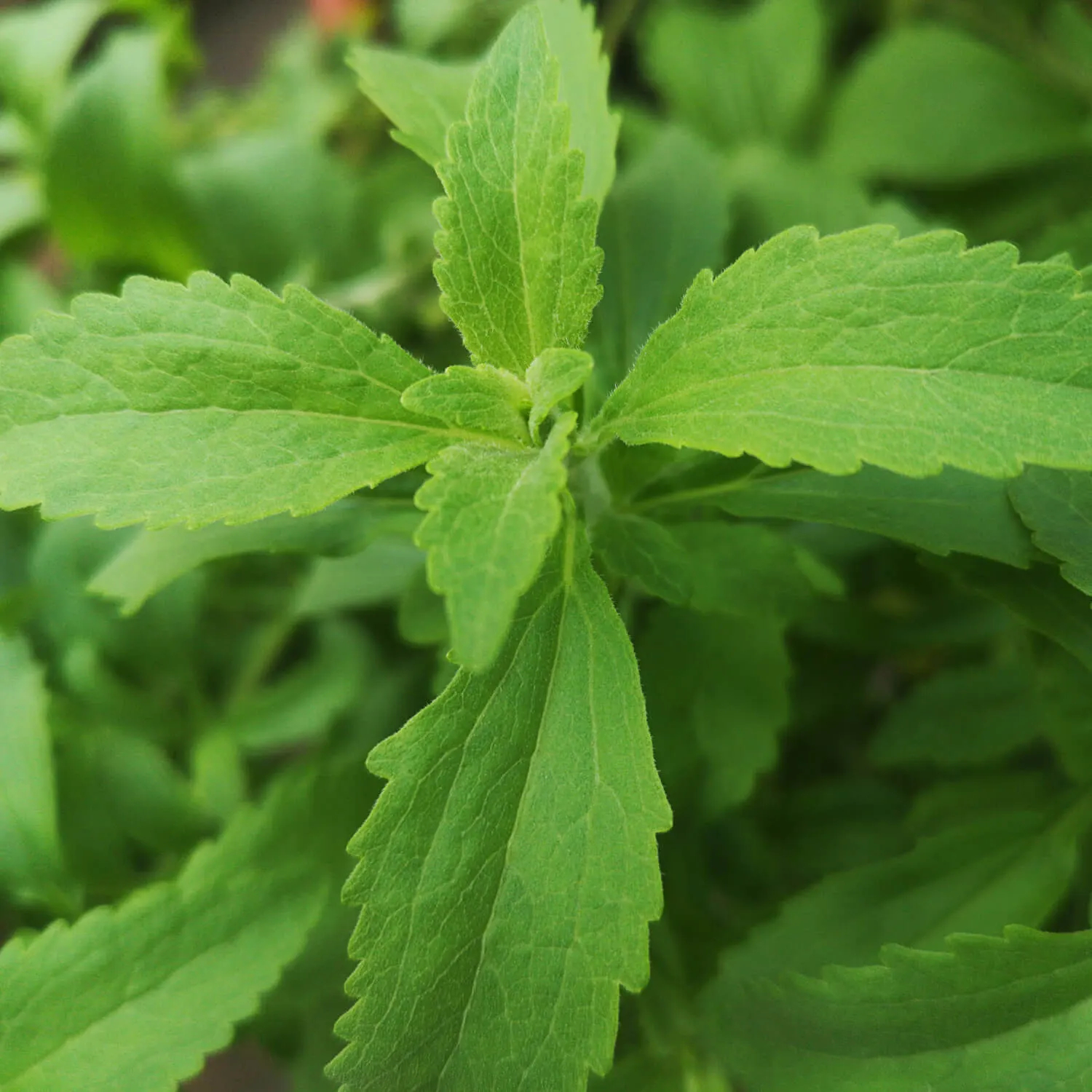
Lance-shaped, sickle-like, and pointed toothed leaves grow on the stems of the Stevia plant. The light to dark green leaves of Stevia can be up to 8 centimeters long, are arranged in opposite pairs, and have fine hairs on the surface. Depending on the Stevia species, the leaves can be either oval or diamond-shaped.
The Stevia Flower
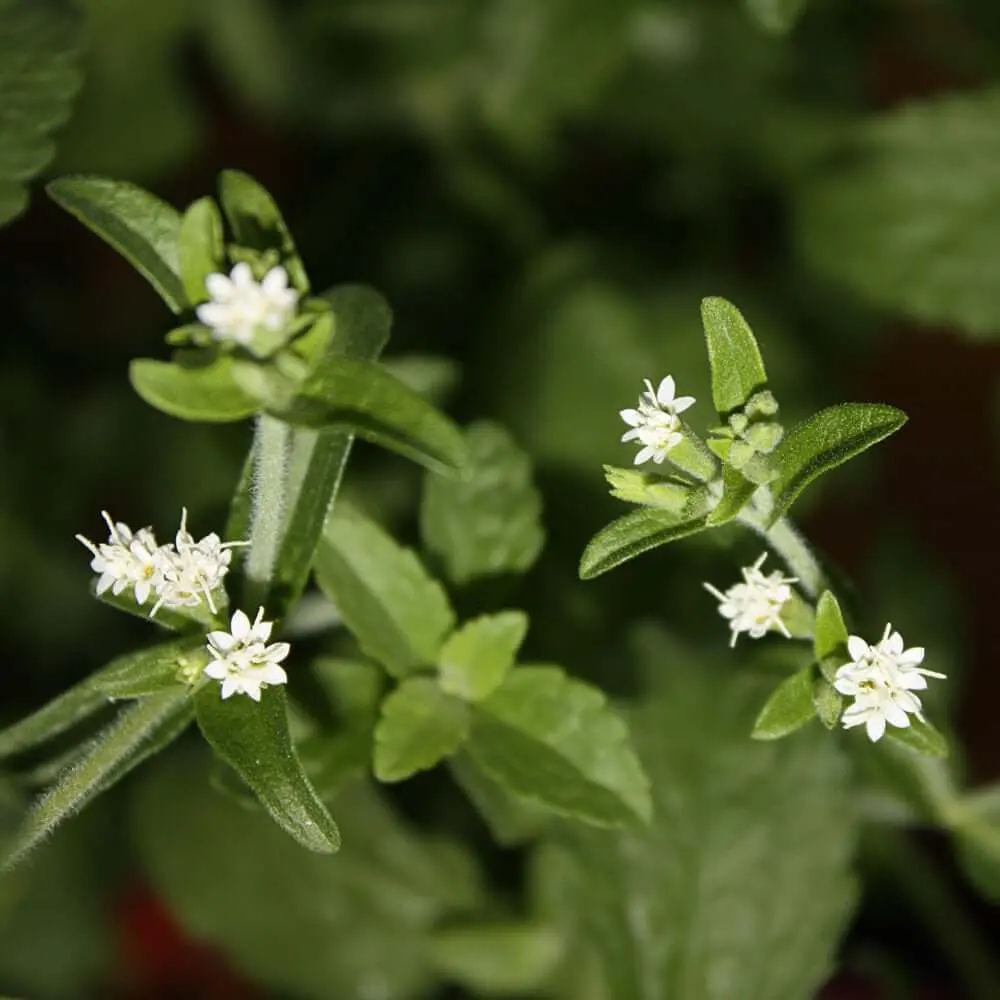
The flowers of Stevia are arranged in an irregular inflorescence and are about 7-15 mm in size. The terminal flower heads of Stevia rebaudiana are grouped into false umbels and consist of white, cylindrical flower heads, each with five flowers. A single shoot of Stevia rebaudiana can bear between 10 and 200 of these flower heads. The fruit of the Stevia plant is long, narrow, and has 4 to 5 edges.
A distinctive feature of Stevia flowers is their self-sterility, meaning these plants cannot self-pollinate. When pollinated with pollen from the same genotype, seed formation does not occur.
Under natural conditions, wind carries pollen between the flowers of different Stevia plants, enabling seed formation. This process is called anemophily (wind pollination) and is also found in other plant species such as apple, pear, and sweet cherry.
Seed Formation in Stevia
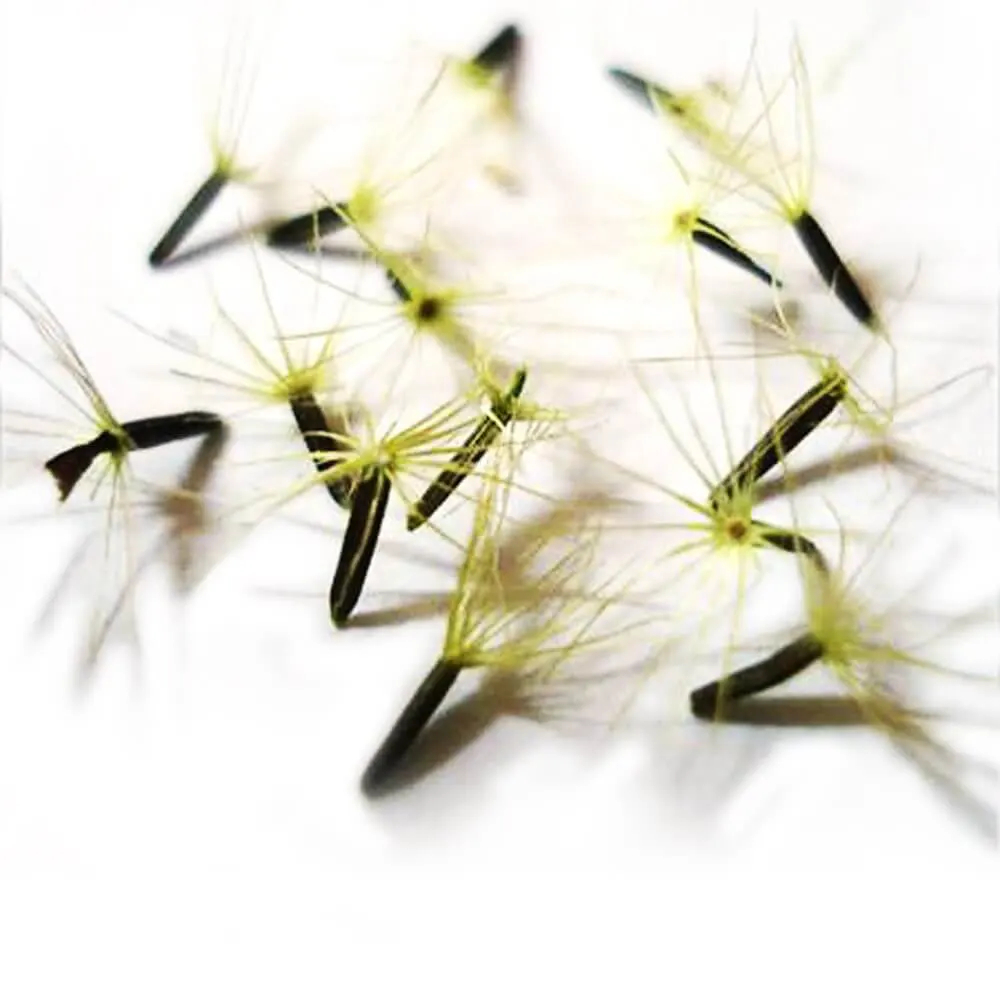
The seeds of the Stevia plant are about 3 mm long and belong to the category of single-seeded fruits (achenes, similar to dandelions). They are equipped with a feathery, flight-capable crown.
After the ripening process, the seeds, which mature within the calyx, can be easily dislodged. Stevia is a light germinator, and on moist soil, the germination period at a temperature of 20-25 degrees Celsius can take up to 14 days.
Vegetative Propagation and Cultivation of Stevia
Vegetative propagation of the Stevia plant through cuttings is considerably easier than germinating Stevia seeds.
Stevia seeds are known for their low germination rate of 12 to 15 percent, even under optimal conditions. A much simpler method is the vegetative propagation of the Stevia plant through cuttings.
Nowadays, Stevia plants can be purchased in many nurseries and garden centers, and they can be grown in the garden during the summer.