Overview of sweeteners and sugar replacements
The sugar substitute ABC | Information on artificial sweeteners
More and more people are becoming aware of the risks associated with excessive sugar consumption and are seeking healthier alternatives. This trend is also reflected in the growing market for sugar substitutes.
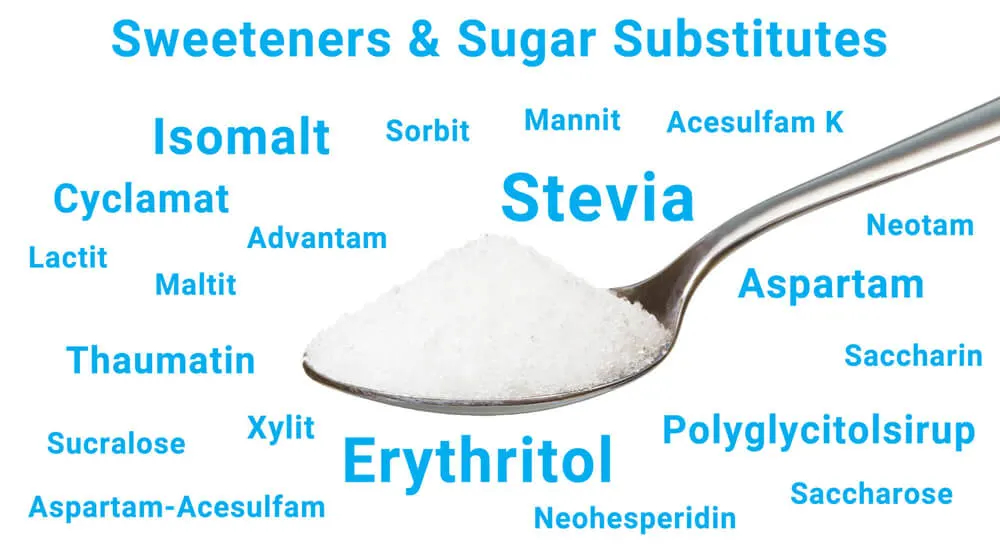
There are viable options such as certain sugar alcohols and specialized sugars, as well as problematic sweeteners from the group of artificial sweeteners (such as Sucralose, Aspartame, Saccharin, Acesulfame-K, and others). We've taken a closer look at the most well-known sugar alternatives for you and present our little ABC on what you should be aware of.
Looking to cut down on or eliminate sugar? Here you can learn all about sugar substitutes, their sweetening power, and calorie content. Keeping track of the myriad sweetener names in processed foods can be challenging. Sugar substitutes and sweeteners: Fitness experts and nutritionists have differing opinions on their health effects. In our sugar substitute ABC, we introduce various sugar alternatives and what to watch for in sweeteners and sugar substitutes.
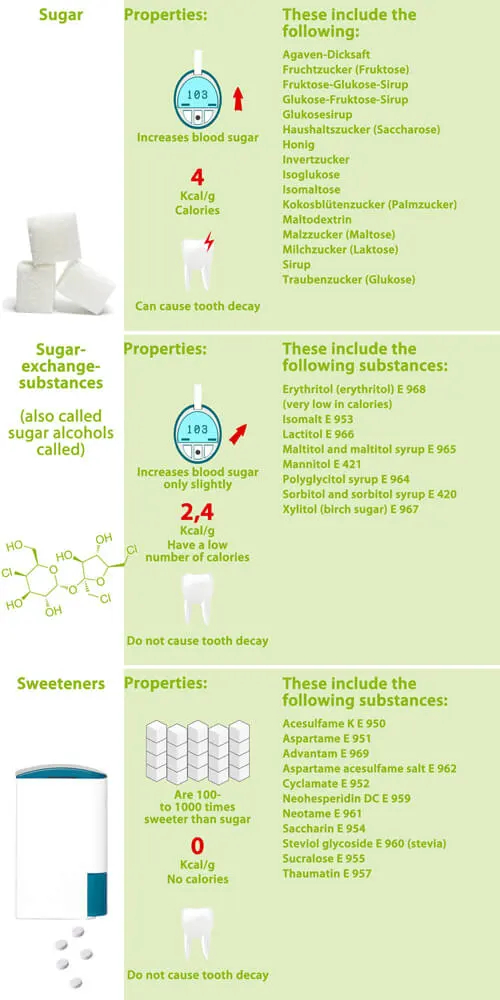
Sugar substitutes can be versatile replacements for sugar. They are metabolized without insulin, help save calories, and are tooth-friendly. These sweet compounds belong to the group of food additives. Sugar substitutes are classified into two categories: Sweeteners and sugar substitutes.
What are sweeteners capable of? Information on artificial sweeteners
Synthetic sweeteners, also known as artificial sweeteners, are permitted in Europe: Acesulfame potassium, Advantame, Aspartame, Acesulfame aspartame salt, Cyclamate, Neohesperidin DC, Neotame, Saccharin, Sucralose, and Thaumatin fall under artificial sweeteners and differ from natural sweeteners. Synthetically produced sweeteners possess a sweetening power ranging from 35 to 37,000 times that of sugar. Depending on the type of sweetener, they contain no calories or the same number of calories as sugar. Due to their high sweetening power, only small quantities are needed. Therefore, products sweetened with sweeteners contain significantly fewer calories than those sweetened with sugar.
Synthetic sweeteners: Aspartame, Cyclamate, Saccharin, Sucralose...
However, the World Health Organization (WHO) has set daily limits to minimize potential health risks. Artificial sweeteners can be up to 37,000 times sweeter than sugar and are primarily used in industrially produced items due to their challenging dosages. In recent years, there has been much discussion regarding possible side effects. It is known that artificial sweeteners can impact metabolism similarly to sugar, particularly Sucralose. This may be due to breakdown products that negatively influence the gut microbiome and make the intestinal wall more permeable to bacteria. Research has also investigated DNA damage caused by Sucralose. The German Federal Institute for Risk Assessment (BfR) warns that "heating Sucralose may produce harmful and carcinogenic compounds." Further investigation is urgently needed.
Sucralose and Saccharin in wastewater
Sucralose is a sweetener with approximately 600 times the sweetening power of sugar, whereas Saccharin is the oldest known artificial sweetener. Both are often found in fitness products or dietary plans. These sweeteners are not significantly broken down in the body or sewage treatment plants, causing them to accumulate in the environment. Artificial sweeteners can now be detected in all global surface waters, and their concentrations continue to rise. In our view, only biodegradable sweeteners should be used.
Not necessarily better: Fructose, honey, agave syrup, and sugar beet syrup
Fructose is found in small amounts (<10%) in all fruits. However, consuming dried fruits or fruit juices can lead to a high intake. In the food industry, Fructose derived from corn starch is often used as an inexpensive raw material.
Fructose is a natural sugar found in many fruits. It is sweeter than table sugar (sucrose), requiring less to achieve the same sweetness. Compared to sucrose, Fructose is about 1.4 times sweeter. Using Fructose instead of sucrose allows the food industry to reduce the sugar content in products while maintaining sweetness.
However, excessive consumption of Fructose, especially from processed foods and drinks, can have adverse health effects, including weight gain, insulin resistance, fatty liver, and increased cardiovascular disease risks. Therefore, it's essential to reduce the overall intake of sugary products, regardless of whether they contain sucrose or Fructose.
In his lecture "Sugar: The Bitter Truth," American pediatrician and endocrinologist Robert Lustig outlines three main drawbacks of Fructose-containing foods. Firstly, Fructose suppresses the satiety hormone leptin, leading to persistent hunger despite adequate caloric intake. Secondly, Fructose is stored as fat in the liver and tissues. Digesting large amounts of Fructose can be challenging for many people, causing symptoms like bloating and diarrhea.
An overview of sugar alternatives:
Apple syrup, agave syrup, sugar beet syrup, and other sweet syrups have high sugar content and pose similar disadvantages to regular sugar. Agave syrup, in particular, is especially sweet due to its high Fructose content. Although sugar beet syrup has higher mineral content, it is not significantly better than white sugar and has its distinctive taste. Tip: After consuming sugary sweeteners, it's advisable to engage in physical activity. They are acceptable in moderation before exercise but less beneficial afterward.
An overview of sugar alternatives:
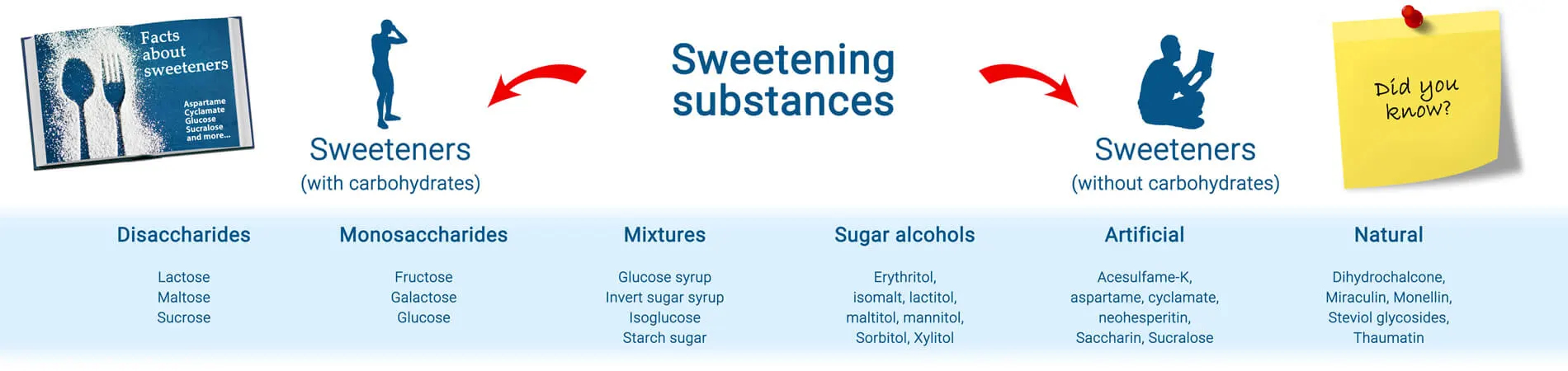
Among the most notable sugar alcohols are Erythritol and Xylitol.
There are various types of sugar alcohols including maltitol, mannitol, and sorbitol, all of which have fewer calories than sugar. Unlike sugar, sugar alcohols such as sorbitol, Xylitol, and Erythritol have the benefit of not being converted by caries bacteria (Streptococcus mutans) into acid that harms the teeth. As a result, they are frequently used in dental care products like chewing gum and candies. Additionally, Xylitol and Erythritol do not have an unpleasant aftertaste. Derived from renewable resources such as wood and corn plant fibers, Xylitol and Erythritol are produced from corn starch without the use of genetic engineering.
How about in terms of calories? Xylitol has 40 percent fewer calories compared to sugar, while Erythritol is completely calorie-free. Products containing Erythritol and Xylitol cause a lower rise in blood sugar levels compared to sugary foods. This provides particular benefits for low-carb enthusiasts and individuals with diabetes, as the need for insulin is reduced.
Sugar substitutes: Allulose, Isomaltulose, and Trehalose
Alongside the commonly used sucrose (household sugar), several other types of sugars avoid many of the disadvantages of regular sugar. These include Allulose, Isomaltulose, and Trehalose.
Allulose, similar to Erythritol, is calorie-free and is derived from regular sugar. It has about 60% of the sweetening power of sugar. It can be widely used as a sugar substitute, although it is unfortunately not yet approved in the EU. The approval process for Allulose is currently underway. In the USA, Allulose has been deemed safe for several years and is gaining popularity. Trehalose and Allulose are distinct sugars with different properties and uses.
What is Trehalose?
Trehalose is a naturally occurring sugar found in many organisms, including plants, animals, and microorganisms. Chemically, it is a disaccharide composed of two glucose molecules linked by a special glycosidic bond.
Trehalose is known for its ability to protect cells and biomolecules. It is a stable sugar that helps maintain the structure and function of proteins, lipids, and other biological molecules during dehydration or in extreme environments. These properties make Trehalose a valuable substance in various fields such as the food industry, pharmaceuticals, biotechnology, and cosmetics.
In the food industry, Trehalose is often used as a sugar substitute and stabilizer. It can improve the texture of foods, retain moisture, and extend shelf life. Trehalose is also marketed in certain health products and supplements, although its health benefits require further research.
It is important to note that despite its many potential benefits, Trehalose cannot be broken down by all organisms. For example, humans lack an enzyme to split Trehalose into its individual glucose molecules. Therefore, Trehalose is not metabolized in the body and does not cause a rise in blood sugar levels like other sugars.
What is Isomaltulose?
Isomaltulose is a carbohydrate made up of glucose and fructose. Chemically, it is a disaccharide with a glycosidic bond between glucose and fructose. Isomaltulose is also known as Palatinose, as it was first isolated from sucrose (table sugar).
The primary advantage of Isomaltulose lies in its unique digestion and metabolism in the body. Unlike other sugars, Isomaltulose is broken down and absorbed more slowly in the intestine. This results in a slower rise in blood glucose levels and contributes to a more stable energy supply. This slow and steady energy release helps keep blood glucose levels stable over a longer period.
Isomaltulose tastes similar to sucrose but has a lower glycemic index. This means it causes less of a spike in blood sugar levels than regular sugar. Therefore, it is often used as an ingredient in foods intended for a low glycemic index diet, such as sports drinks, energy bars, and diabetic products.
It is important to remember that Isomaltulose still contains carbohydrates and should be consumed in moderation, especially by people with diabetes or metabolic disorders. As with all food additives, it is advisable to follow consumption recommendations and information on product labels.
More information about the individual sweeteners
Acesulfame K is a synthetic sweetener used as an additive in foods. It has a high sweetening power and is often combined with other sweeteners to enhance taste. Acesulfame K is calorie-free and is not metabolized by the body, which makes it attractive for dietary and sugar-free products. It has good stability at high temperatures, making it suitable for baking and cooking. Although it is considered safe for consumption, there are some controversies and concerns about possible health effects.
Aspartame is an artificial sweetener used as a sugar substitute in many foods and drinks. It is about 200 times sweeter than sugar. Aspartame is made up of the amino acids aspartic acid and phenylalanine. It is low in calories and does not affect blood sugar levels. However, aspartame can be harmful to people with the rare metabolic disorder phenylketonuria (PKU).
Cyclamate is an artificial sweetener used as a flavor enhancer. It is about 30 to 50 times sweeter than sugar. Discovered in the 1930s, Cyclamate has been approved as a food additive in many countries. Cyclamate has a slightly bitter aftertaste, which is why it is often combined with other sweeteners. There is debate over the health effects of Cyclamate, and it is restricted or banned in some countries due to potential health risks.
Saccharin is an artificial sweetener used as a sugar alternative. It is about 200 to 700 times sweeter than sugar. Saccharin has no significant calories and is often used in low-calorie or sugar-free products such as drinks, desserts, sweets, and chewing gum. Discovered in the late 19th century, Saccharin has been approved as a food additive ever since. Although Saccharin is considered safe for consumption, it can have a metallic aftertaste for some people.
Sucralose is an artificial sweetener that is about 600 times sweeter than sugar. It is made from sucrose (sugar) by replacing three hydroxyl groups with chlorine atoms. Sucralose has no significant calories and is often used in low-calorie or sugar-free foods and beverages. It has a similar taste to sugar without the bitter aftertaste of some other sweeteners. Sucralose is commonly found in diet colas, energy drinks, juices, alcoholic beverages, teas, yogurts, puddings, pastries, frozen desserts, canned fruits, chewing gums, protein powders, candies, and cereals.
Effects on the gut: The use of Sucralose can lead to a reduction in the diversity of gut bacteria and damage beneficial gut bacteria. These damaged bacteria can even enter the bloodstream through the compromised intestinal lining, which is not ideal. Influence on blood sugar levels: Even at levels considered safe, Sucralose can influence blood sugar levels. Within just two weeks, participants showed poor sugar utilization, leading to significantly increased blood sugar levels.
Thaumatin is a naturally occurring protein used as a sweetener. It is derived from the fruit of the West African katemfe plant. Thaumatin has an extremely high sweetening power, around 2,000 to 3,000 times stronger than sugar. It is often used in foods and beverages to enhance flavor and reduce the sugar requirement. Thaumatin has a long-lasting, mild sweet taste and is frequently combined with other sweeteners to achieve the desired flavor. It is considered safe for consumption and has been approved as a food additive in many countries.
Stevia, or more precisely steviol glycosides, is a natural sweetener extracted from the leaves of the Stevia plant. It is significantly sweeter than sugar and has no significant calories, making it a popular alternative for people looking to reduce their sugar intake. Steviol glycosides do not affect blood sugar levels, potentially making them suitable for diabetics. They are also tooth-friendly since they are not broken down by bacteria in the mouth. Stevia is considered safe for consumption and has been approved as a food additive in many countries.
Neotame is a high-intensity artificial sweetener chemically related to Aspartame. It is approximately 8,000 to 13,000 times sweeter than sugar. Neotame was developed to provide an intense sweet taste without bitter aftertastes. It is highly stable at high temperatures and has a broad pH range, making it suitable for various food and beverage applications. Neotame has no significant nutritional value and does not affect blood sugar levels. It has been deemed safe for consumption by the US Food and Drug Administration (FDA).
Neohesperidin DC is a natural plant compound derived from the citrus fruit bitter orange (Citrus aurantium). It belongs to the flavonoid glycoside group. Neohesperidin DC is often used as a flavor enhancer and bittering agent to improve the taste of foods and beverages. It has a pronounced bitterness, so it is often combined with other sweeteners to achieve a balanced taste. Neohesperidin DC has a low calorie count and does not affect blood sugar levels. It is approved as a food additive and is considered safe for consumption.
Aspartame-Acesulfame Salt is a blend of the artificial sweeteners Aspartame and Acesulfame-K. This combination is often used to provide improved sweetness and a more balanced taste. It is about 200 to 300 times sweeter than sugar. Aspartame-Acesulfame Salt is frequently used in low-calorie or sugar-free foods and beverages to reduce sugar content without losing sweet flavor. It is highly stable under heat and is suitable for a wide range of applications. It is approved as a food additive and is considered safe for consumption.
Advantam is a high-intensity artificial sweetener that is about 20,000 times sweeter than sugar. It was developed to offer extremely high sweetness while delivering a pleasant taste without any bitter aftertaste. Advantam is approved as a food additive for use in many countries. It does not affect blood sugar levels and contains no calories. Advantam is highly stable under heat and has a wide pH range, making it suitable for various food and beverage applications. It is considered safe for consumption.