Stevia Test and Comparison 2024 | Stevia Overview: Tests and Comparison
Fake Test Results and Non-Existent Examinations
More and more frequently, supposed product tests like the Stevia Test 2024 are appearing online, often providing only insufficient background information. The internet is full of alleged quality tests on various comparison sites. Terms like “Stevia Test & Comparison” or “Stevia Comparison 2024” are just some examples.
Such tests are often labeled as “The Best Stevia Products in Comparison,” claiming that the Stevia products have been thoroughly examined. Many of these sites assert that the investigations are conducted independently, which in most cases is not true.
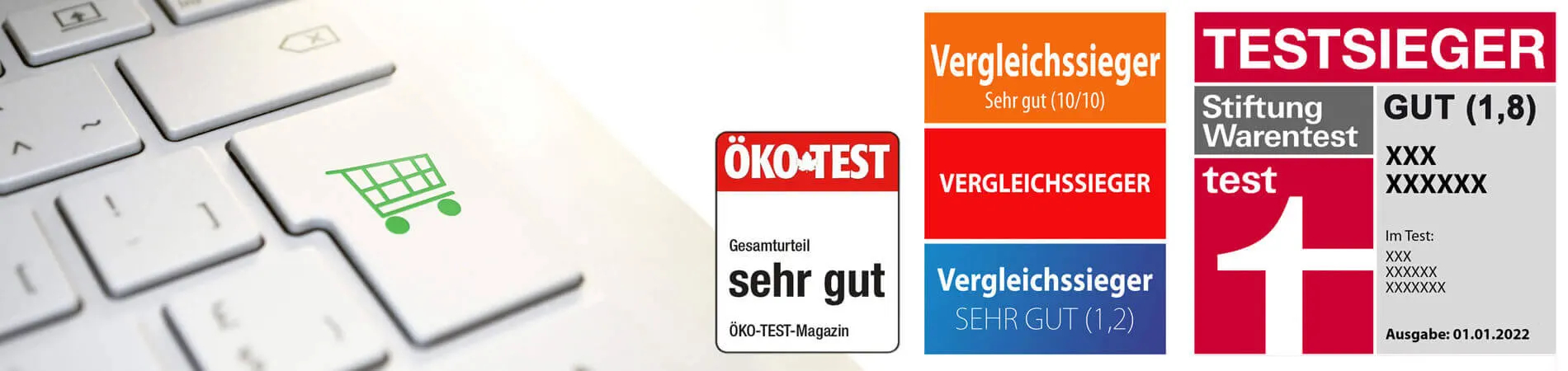
Many consumers are unaware that these products have not been tested by reputable organizations such as Stiftung Warentest or Ökotest. Only these two institutions conduct truly independent product tests. Comparison sites earn revenue through supposedly tested products.
In reality, it is “Affiliate Marketing,” a sector of online marketing where website operators and bloggers incorporate ad links from third parties (such as Amazon or Ebay) on their sites and receive commissions in return.
You can often identify this when a redirecting link takes you directly to an online retailer like Amazon or Ebay. If a visitor clicks on a product link on the comparison site, they are immediately directed to Amazon or similar sites.
At that moment, the operator of the comparison portal receives a generous commission from the online retailer because they are driving customers to their site. This method is called Affiliate Marketing. Google also operates its own affiliate program and pays commissions to everyone who links to content in the Google Play Store.
Commissions in Affiliate Marketing
Depending on the agreement, the affiliated companies or individuals (website operators and bloggers) receive commissions. Just a single click on the link to the promoted product is enough to earn the website operator a commission. This marketing strategy is called Cost-per-Click (CPC).
The blogger or website owner thus serves merely as a mediator between the retailer/seller and potential customers.
An Example
For instance, Mrs. Mustermann has embedded several links to various Stevia products in her Stevia Test 2024. For every click on these links, Mrs. Mustermann receives a commission.
Consumers Lose Orientation
The Problem: Many users are overwhelmed as authentic and unreliable content on the internet heavily intermingle. How can one determine which information is accurate and which is not?
The chaos is complete. In addition to purely fake test websites, there are also sites with affiliate links presenting “comparisons” by “editors” who have never tested or handled the product.
These editors claim to research the product and evaluate customer reviews. Subsequently, they select a so-called comparison winner and create a questionable top list.
The number of fake test sites is rapidly increasing because these websites can be created quickly and inexpensively.
Here are some clues that may indicate an unreliable test site:
· Exclusively excellent reviews
· Prominent links to retailers
· Obscuring terms
· No test description
· No imprint or indications of a remote location
True transparency and reliable test results can only be found with Stiftung Warentest or Ökotest. Both are independent testing organizations.
Öko-Test and Stiftung Warentest Guarantee Independent Test Results
Useful tips for identifying fake tests can be found in an article by Stiftung Warentest: Fake Test Reports and Non-Existent Examinations
Fake Reviews | Misleading Testimonials
How Sellers on Amazon Strive for Positive Reviews
Customer Reviews as a Purchasing Criterion
Many German consumers read customer reviews before buying a product online. What is written in these reviews often significantly influences the purchasing decision.
The Fake Review Scene on Social Networks
There are numerous offers of this kind in Facebook, Telegram, and WhatsApp groups, with some groups having up to 15,000 members. This system operates similarly to a review marketplace. Once you sign up, you are bombarded with offers.
The procedure is always the same: You purchase the product with your own Amazon account, write a review, and then get your money back.
What to Make of Online Reviews?
The Bavarian Consumer Center has found that manipulated reviews are widespread not only on Amazon but also on many other online portals.
The Bavarian Consumer Center has gathered helpful information on this topic: What to Make of Online Reviews?
Identifying Fake Customer Reviews
Many online shops and their customers struggle with the issue of fake reviews. We’ll explain ten common signs to help you identify such fake testimonials.
How to Spot Unreliable Customer Reviews
Smaller manufacturers, in particular, find it increasingly difficult to compete due to the vast array of products available. As a result, many turn to fake customer reviews.
Number of Reviews
Fewer and fewer consumers are leaving reviews, which presents a problem for many vendors. Therefore, pay attention to the number of reviews a product has. If a new item has an unusually high number of reviews, you should be skeptical.
One-Star Reviews Can Also Be Fake
Negative reviews can also be fraudulent, especially if they conspicuously recommend competing products. Pay attention to the language used in such reviews.
A new trend is that merchants, not just on Amazon, attempt to harm competitors with bad reviews to lower their rankings. Therefore, be particularly critical when reading highly negative reviews.
For just 99 euros, you can get 10 fake reviews
The business of fake reviews is booming. International agencies like Fivestar, Goldstar, and Lutendo have specialized in selling fake customer reviews. For 99 euros, you can already get 10 top reviews.
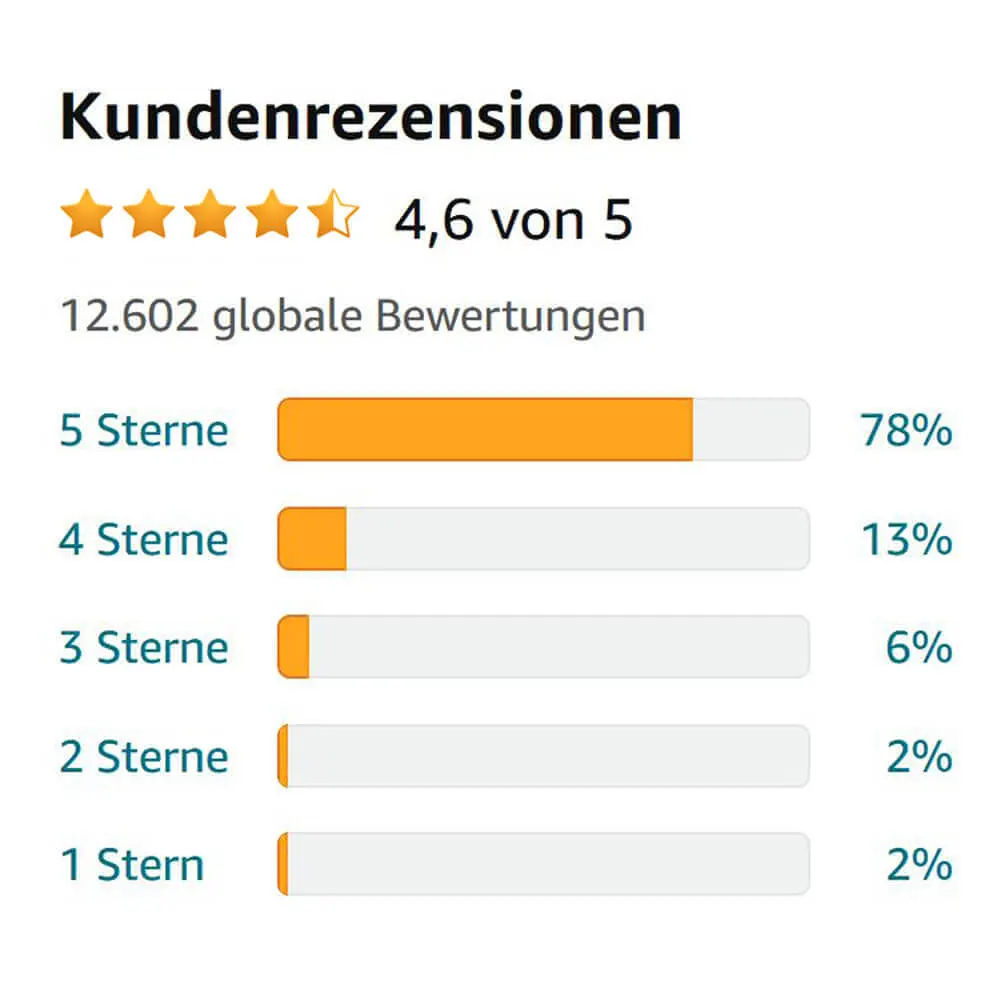
However, even genuine customer opinions often do not reflect the actual quality of a product. This is demonstrated by a scientific study from the Technical University of Dortmund. Here, Amazon reviews were compared with the results from Stiftung Warentest.
A large portion of the tested products received significantly higher ratings on Amazon than at Stiftung Warentest. Even products that failed the tests managed to achieve 4 or more stars on the marketplace.
Further Information: Scientific study by TU Dortmund and Stiftung Warentest available for download.
Don't Trust Online Reviews Blindly
According to Stiftung Warentest, purchased reviews reliably end up on Amazon.
You can find articles from Stiftung Warentest here:
· How Sellers Deceive Customers with Bought Reviews
· How to Identify Unreliable Customer Reviews
· These Methods Are Used by Fake Reviewers
Conclusion
Such websites predominantly do not offer neutral test reports, as they are merely marketing tools.
Only Öko-Test and Stiftung Warentest continue to provide reliable and independent test results even after many years.
Customers should individually determine which criteria are important to them and base their choices on these factors.
Our comprehensive Stevia guide aims to help you find the suitable Stevia product.
In our Stevia guide, we answer frequently asked questions. Additionally, we have compiled important information and tips that you should keep in mind when purchasing Stevia.