The Approval of Stevia
The Approval of Stevia as a Sweetener
The official approval of Stevia in Europe, and consequently in Germany, was granted in December 2011 by the European Food Safety Authority (EFSA).
Before this approval, Stevia was used as a bath additive or in cosmetics. At that time, Stevia sweeteners were not allowed to be sold as food.
Public interest in the health-promoting sweetness of Stevia rebaudiana continuously grew, and the approval is largely thanks to the efforts of Prof. Dr. Jan Geuns from the University of Leuven in Belgium.
Stevia has been approved in the EU and Germany since 2011.
In Germany, the agricultural faculties of the Universities of Bonn and Hohenheim have been intensively engaged in the cultivation, research, production, and processing of Stevia since the mid-1980s. Initial field trials with various Stevia plant species were also conducted here.
The Approval of Stevia Extract – Steviol Glycosides in the EU
After nearly 25 years, the approval was finally granted in the EU and thus in Germany.
According to the "Novel Food Regulation," novel foods and food additives may only be marketed in the EU if their safety has been proven.
EFSA reviewers examined all available data and eventually approved the EU applications submitted by EUSTAS (European Stevia Association) and two corporations for Stevia and Steviol glycosides.
Maximum Acceptable Daily Intake (ADI)
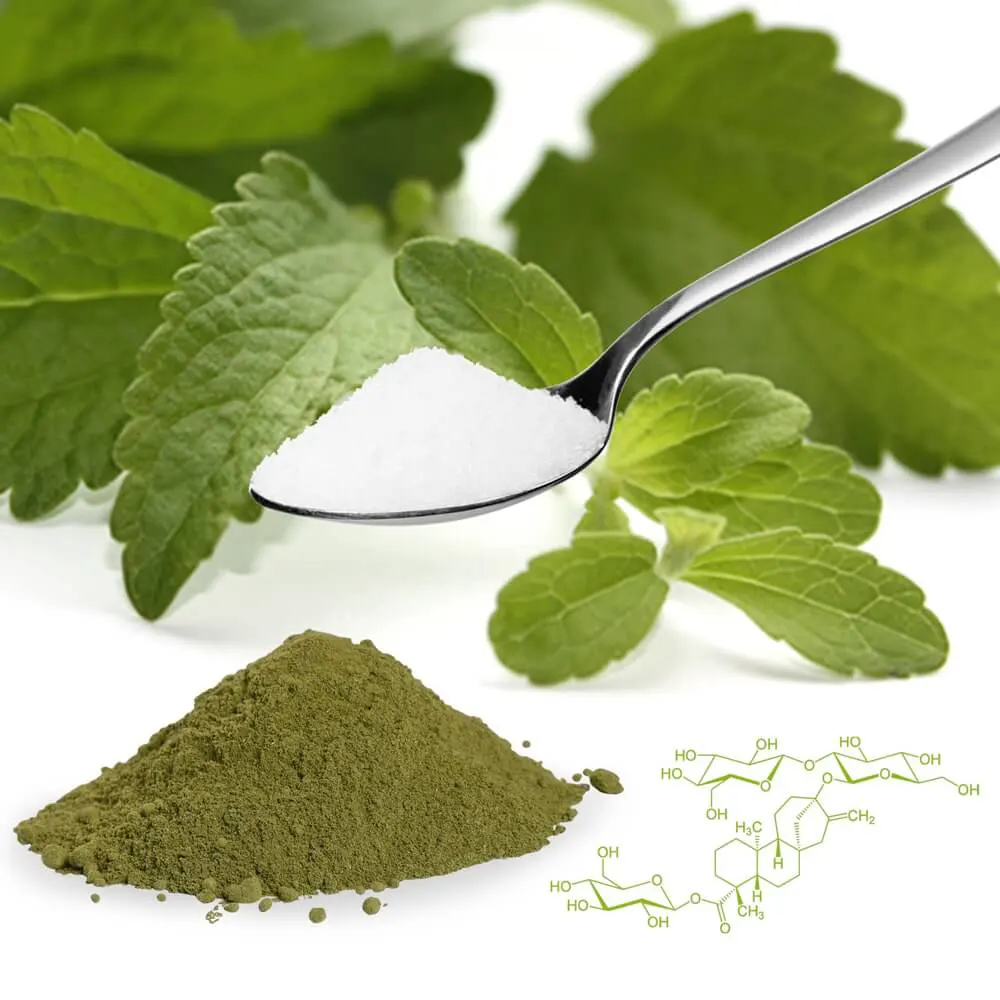
For steviol glycosides, an ADI (Acceptable Daily Intake) of approximately 0-4 mg steviol equivalents per kilogram of body weight has been established.
When converting this value to steviol glycosides, it results in an amount of about 12 mg per kilogram of body weight, depending on the composition.
Health Safety of Steviol Glycosides
Since sweeteners are classified as food additives under food law, they must undergo thorough testing to ensure their health safety.
In these tests, it does not matter whether the sweetener is of natural origin or artificially produced. A food additive will only be approved if it has a clear benefit for the consumer.
This represents a success for all health-conscious consumers in Germany and Europe.
To market and use steviol glycosides globally as collective products, large companies like Coca-Cola and Cargill have increasingly collaborated in recent years.
These two companies have published new studies on the health safety of steviol glycosides, as long demanded by the Scientific Committee on Food of the EU Commission. The final report from the European Food Safety Authority on this was presented on April 14, 2010.
This report confirmed the health safety of steviol glycosides up to a maximum daily dose of 0-4 mg per kilogram of body weight.
The Global Spread and Approval of Stevia
In Japan, the cultivation of Stevia has been carried out since the 1960s. The health-conscious attitude of the Japanese led to Japan, along with Brazil, being one of the first countries to intensely research and utilize steviol glycosides on a large scale.
Japanese and Brazilian scientists were able to demonstrate in joint studies that steviol glycosides are non-toxic. Today, Japan is one of the largest consumers of the natural sweetener steviol glycosides, importing it mainly from China, Brazil, Korea, and Taiwan. Japanese consumers now have a wide selection of Stevia products as well as foods and beverages sweetened with Stevia.
Since 2008, Stevia products have been allowed to enter the market in Australia, New Zealand, and Switzerland (under a fast-track approval). There, you can find herbal teas, candies, iced tea, and many other foods sweetened with steviol glycosides.
In South America, particularly in Argentina, Brazil, and Paraguay—the homeland of the Stevia rebaudiana plant—Stevia has been cultivated and used since the early 20th century. The question of Stevia approval never arose here. In Asia, especially in Southeast Asia, the situation is similar: Stevia has now become an important export commodity.